


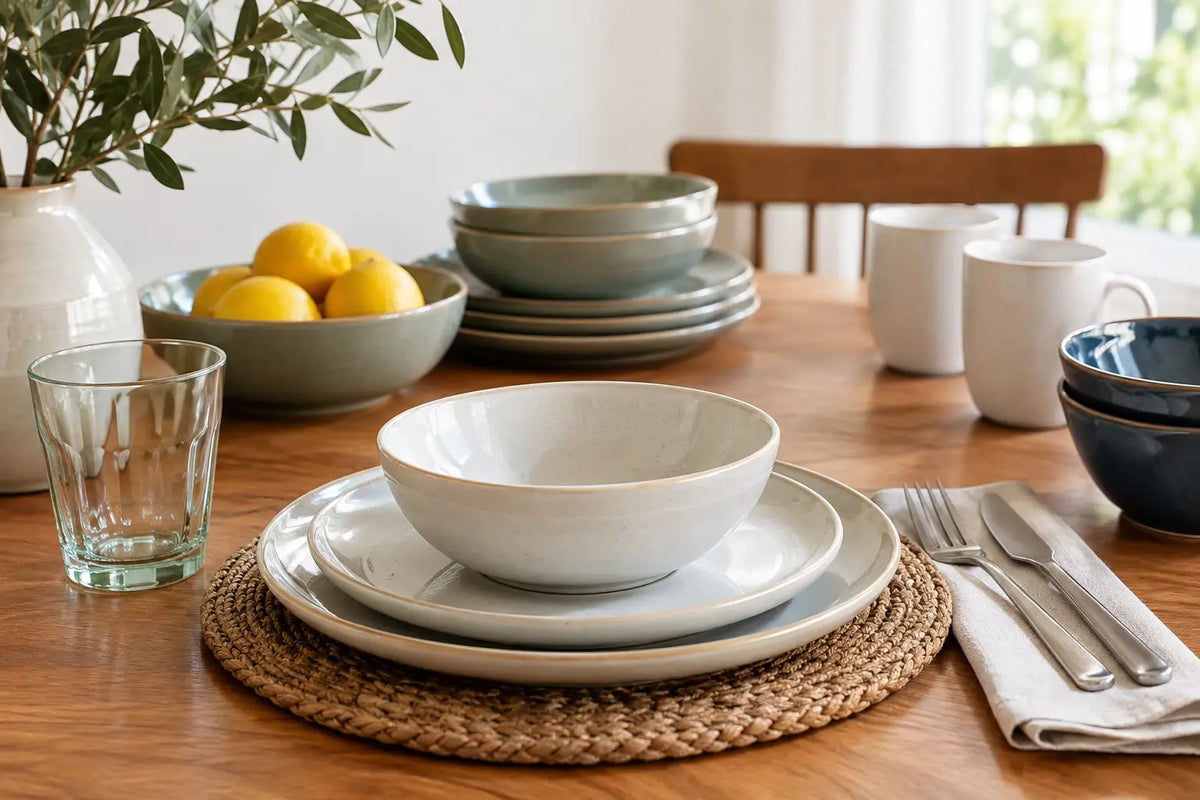
A dinner plate does more than hold a meal. It sets the tone for rushed Tuesday breakfasts, slow Sunday suppers, birthday cake, and the friends who stay for one more cup of coffee. Knowing how to choose dinnerware means finding pieces that look considered on the table while standing up to the life happening around it.
The best choice is rarely the most formal or the most trend-driven. It is the collection you will reach for often, feel good serving from, and trust with the people you love.
Start With the Way You Actually Eat
Before comparing materials or colors, consider your real routines. A household that serves family-style pasta twice a week needs something different from a couple building a wedding registry or a frequent host who likes a layered place setting.
For most homes, a 16-piece set is a practical starting point for four people: dinner plates, salad plates, bowls, and mugs. If you entertain regularly, buying enough for eight or 12 prevents the table from feeling pieced together and gives you breathing room between dishwasher cycles. Open-stock pieces can also be useful when your needs are less predictable. You may use bowls constantly but reserve salad plates for guests, for example.
Think about the meals you serve, not just the pieces traditionally included in a set. Wide, low bowls suit grain bowls, pastas, and saucy dishes particularly well. Deep cereal bowls are more versatile for soup, oatmeal, ice cream, and casual lunches. A matching serving platter or large bowl can make an everyday meal feel more generous without requiring a formal dining room.
How to Choose Dinnerware by Material
Material shapes the weight, appearance, durability, and care requirements of dinnerware. There is no universal winner. The right option depends on whether you prioritize relaxed texture, delicate refinement, or the most adaptable balance of both.
Stoneware for everyday warmth
Stoneware has a substantial, grounded feel that works beautifully for daily meals and informal entertaining. High-fired stoneware is especially valued for its durability, because firing at high temperatures creates a dense body designed for regular use. It tends to feel more relaxed than formal china, yet its weight and finish can bring real presence to the table.
This is an excellent choice for families, first homes, and anyone who wants one collection to carry weeknight dinners through holiday hosting. Look for well-finished rims and a glaze formulated for everyday use. Stoneware is not indestructible, however. Avoid dramatic temperature changes, such as moving a chilled plate directly into a hot oven, unless the manufacturer specifically confirms it is oven-safe.
Fine bone china for a lighter, elevated table
Fine bone china is prized for its smooth finish, lightness, and refined appearance. It can make a table feel polished without being overly ornate, particularly in clean white or softly colored designs. Quality bone china is often durable enough for regular use, despite its more delicate look.
Choose it when you enjoy a lighter plate in hand, want a more formal presentation, or are building a registry that can move easily from everyday dining to celebrations. White bone china also offers long-term flexibility: it pairs with nearly any linen, glassware, or serving piece you add later.
Reactive-glaze ceramics for distinctive character
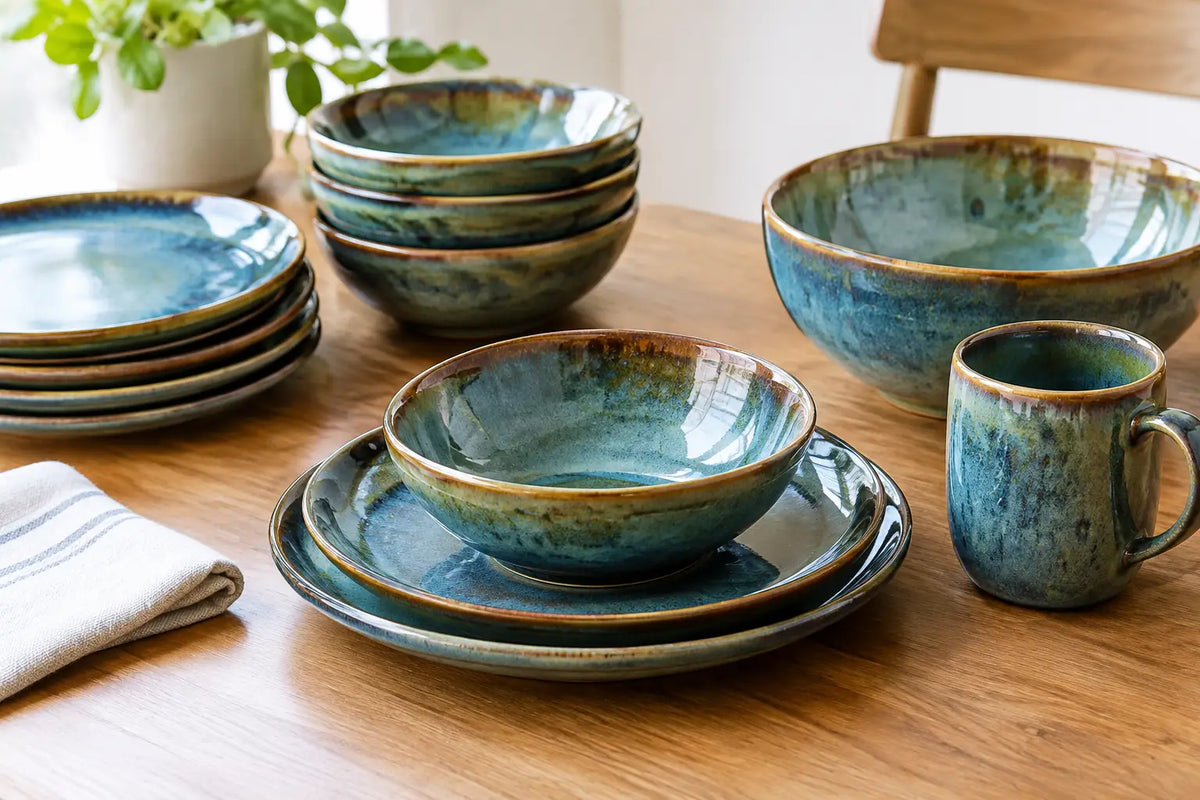
Reactive glazes create variation during firing, so no two pieces look precisely alike. The result may include tonal movement, subtle speckling, or shifts in color around the rim. This gives a table the visual depth of artisan work while keeping the place setting cohesive.
The trade-off is that variation is part of the design. If you want every plate to match exactly, a solid, uniform glaze may be a better fit. If you appreciate pieces with personality, reactive-glaze dinnerware makes even simple food look thoughtfully served.
Choose a Shape That Fits Your Menu and Storage
Round dinnerware is classic for good reason: it stacks efficiently, suits nearly every meal, and works with both traditional and contemporary tables. Coupe-style plates, with their gently curved rims and open profile, feel modern and are especially useful for meals with sauces. Rimmed plates create a more defined frame around food and can feel slightly more formal.
Size deserves more attention than it usually gets. Oversized dinner plates can crowd smaller tables and encourage portions that feel larger than intended. A dinner plate around 10 to 11 inches is comfortable for most meals, while a smaller salad plate helps create a layered setting without overwhelming the table.
If cabinet space is limited, measure before you buy. Check shelf height, dishwasher clearance, and the width of your everyday placemats. A beautiful set should fit your home as naturally as it fits your style.
Let Color Support Your Home, Not Compete With It
White dinnerware is enduring because it makes food the focal point and works across seasons. It is also easy to replace or expand over time. But neutral does not have to mean plain. Cream, sand, gray, soft blue, and earthy green can bring warmth while remaining versatile enough for daily use.
A bolder hue can be equally practical when it reflects the rest of your home. Deep blue plates may feel striking with natural wood, while a warm terracotta tone can make a minimalist kitchen feel less stark. The key is choosing a color you will still enjoy after the novelty wears off.
For a collected look, start with a neutral base and introduce color through bowls, mugs, linens, or serving pieces. This approach gives you room to refresh the table without replacing an entire set.
Put Food Safety and Daily Care First
Dinnerware should be beautiful, but health and safety are non-negotiable. Choose pieces that are clearly stated to be 100% lead- and cadmium-free, especially if you use them every day, serve children, or plan to give them as a gift. Reputable brands should be direct about material standards rather than leaving shoppers to guess.
Also confirm the care instructions before making a decision. Dishwasher-safe dinnerware is a practical priority for many households. Microwave-safe pieces make reheating easier, but metallic accents may rule that out. Oven-safe claims should be treated separately from microwave-safe claims, since they are not interchangeable.
Even durable ceramics last longer with sensible care. Avoid stacking heavy cookware on top of plates, use a soft cloth between special pieces if your cabinets are tight, and allow hot dinnerware to cool gradually before washing. These small habits protect both the glaze and the structure beneath it.
Buy Enough, Then Plan for Real Life
A set sized exactly to your household can be frustrating when one plate is in the dishwasher, one is holding leftovers, and guests arrive unexpectedly. For a family of four, service for six is often more comfortable. For frequent hosts, service for eight or 12 creates an easier, more polished table.
It is also worth considering replacement support when shopping online. Dinnerware travels a long way before it reaches your cabinet, and accidents can happen after delivery, too. HomeVss offers free breakage replacement, removing much of the worry from choosing handcrafted ceramic pieces online. That kind of policy is not simply a convenience. It makes it easier to invest in dinnerware you genuinely want to use.
Choose Pieces You Will Be Glad to Set Out
The most satisfying dinnerware does not wait for a holiday or a perfectly styled table. It makes scrambled eggs look inviting, gives takeout a more intentional home, and helps guests feel expected rather than accommodated.
Choose a material that suits your pace, a shape that serves your favorite meals, and a finish that makes you pause for a second before sitting down. The right set earns its place not by staying flawless in a cabinet, but by becoming part of the gatherings, routines, and small celebrations that make a home feel lived in.


Hinterlasse einen Kommentar
Diese Website ist durch hCaptcha geschützt und es gelten die allgemeinen Geschäftsbedingungen und Datenschutzbestimmungen von hCaptcha.