


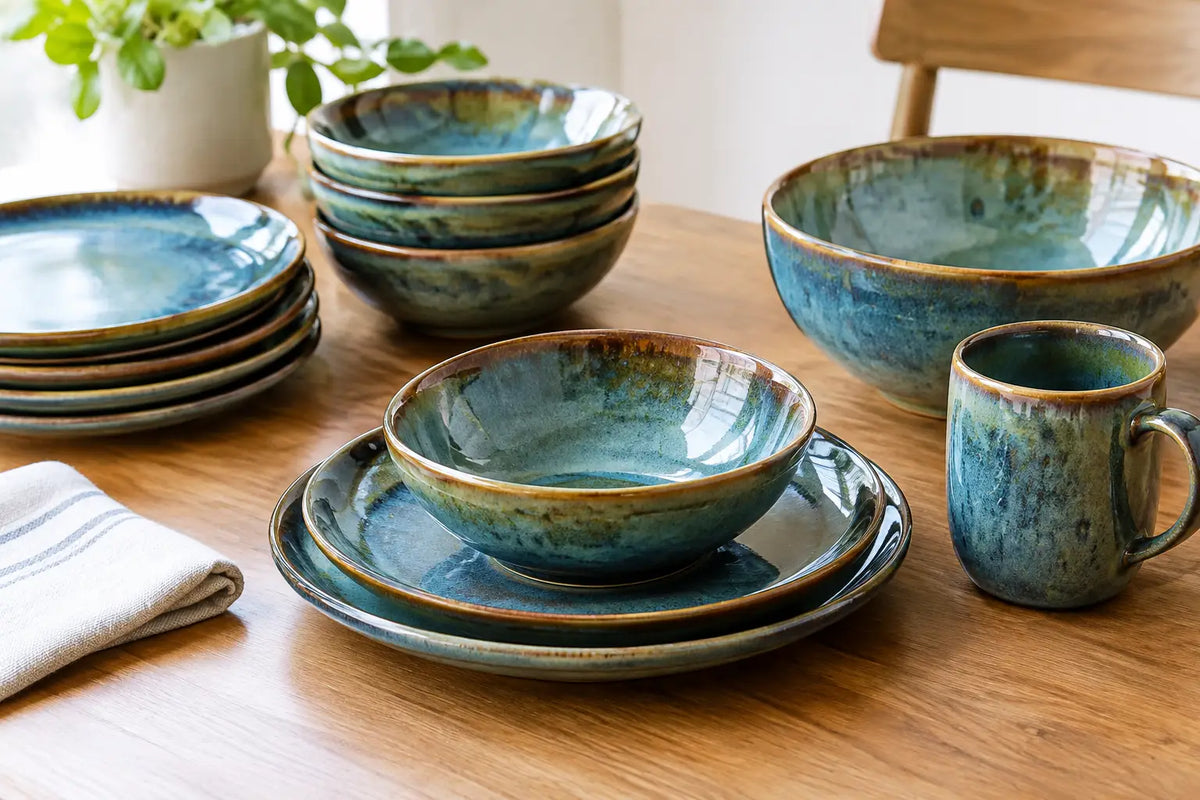
A reactive-glaze bowl can make scrambled eggs feel considered and a weeknight pasta look worthy of company. That is the appeal, but a beautiful finish alone does not make a smart purchase. This reactive glaze buying guide will help you choose dinnerware with the character you want and the durability, safety, and everyday practicality your table needs.
Reactive-glaze pieces are meant to feel individual. The color may pool into a darker rim, soften toward the center, or reveal tiny shifts in tone that appear only in certain light. Those variations are part of the craftsmanship, not a flaw. The best choice is the one that welcomes that handmade look while still fitting the way you cook, eat, clean, and host.
What Makes Reactive Glaze Different?
A reactive glaze is created when mineral ingredients in the glaze respond to high heat during firing. As the kiln temperature rises, colors and textures develop in subtle, unpredictable ways. The result is a surface with depth - often speckled, layered, softly mottled, or edged with richer color.
Unlike a flat, uniform glaze, reactive glaze gives each plate, mug, and bowl its own visual movement. Two dinner plates from the same collection should coordinate, but they may not be exact twins. For many homes, that balance is ideal: the table looks collected and artful while the place settings still feel cohesive.
The trade-off is simple. If you prefer every piece to match with near-perfect consistency, a solid-color porcelain or bone china set may suit you better. If you appreciate natural variation and want dinnerware that brings warmth to everyday meals, reactive glaze is a strong choice.
Reactive Glaze Buying Guide: Start With the Material
The glaze gets the attention, but the body beneath it determines much of the dinnerware's performance. For daily use, stoneware is often the most practical place to start. It has a satisfying weight, retains warmth well, and offers the substantial, artisan feel many shoppers want from reactive-glaze collections.
High-fired stoneware is especially worth seeking out. Firing at high temperatures helps create a dense ceramic body designed for regular use. It is not indestructible - any ceramic can chip or break if dropped against a hard floor or sink - but well-made stoneware is far better suited to family meals than decorative pieces made only for occasional display.
Fine bone china can also carry beautiful glazes, although it creates a different look and feel. It is lighter, more refined, and often more formal in profile. Choose it when you want a delicate silhouette for celebrations or an elevated everyday table. Choose stoneware when you want visual texture paired with reassuring heft for cereal, soup, takeout nights, and long Sunday lunches.
Look Closely at Color, Shape, and Finish
Shopping from product photos can be deceptively simple. A reactive glaze should be evaluated as part of the entire piece, not just as a color swatch.
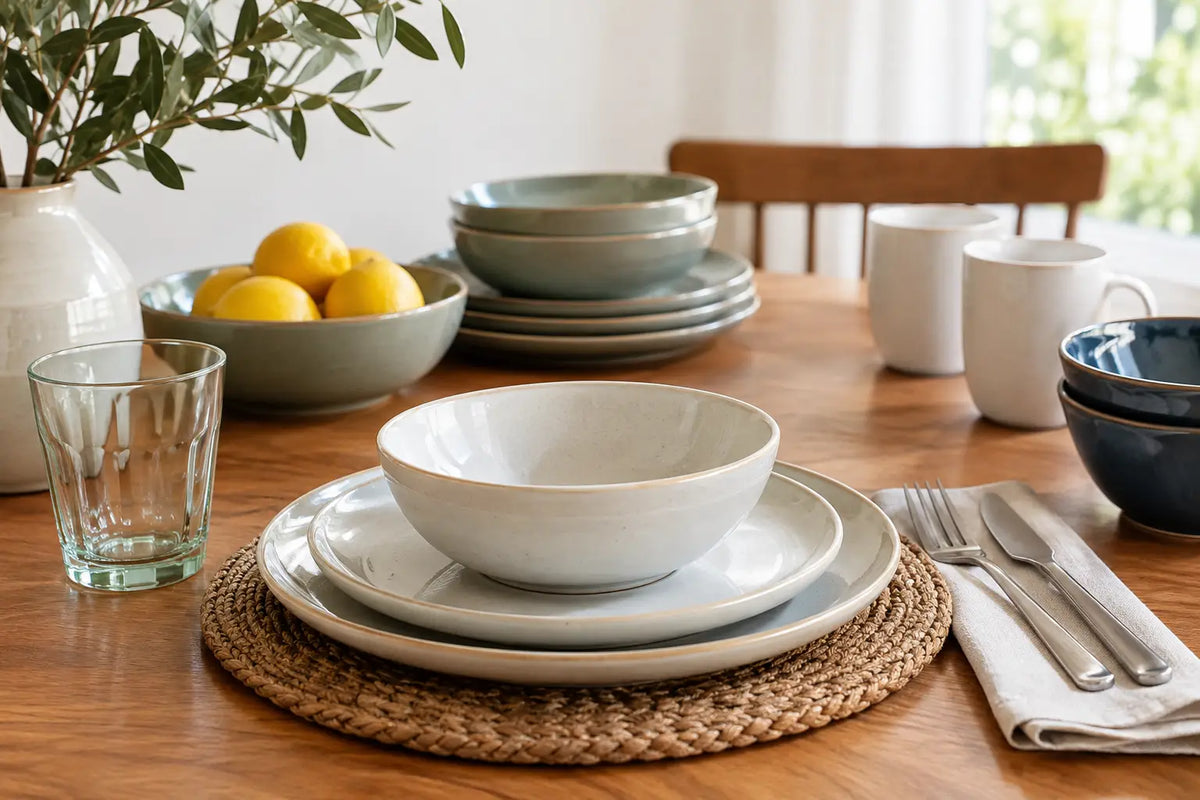
First, consider the color family. Deep navy, charcoal, forest green, and iron-rich brown tones create a grounded, restaurant-inspired table. Cream, sand, pale blue, and soft gray feel lighter and more flexible across seasons. If your kitchen includes warm wood, brass, or natural linen, earthy glazes tend to settle in beautifully. Cooler finishes can sharpen the look of white cabinets, marble, and modern settings.
Then look at the shape. Wide, low bowls are excellent for grain bowls, pastas, salads, and composed dinners. Classic coupe plates give a clean, contemporary profile and make plating feel less fussy. Plates with a raised rim can be more forgiving for saucy meals, especially for families with younger children.
Finally, read the finish with everyday use in mind. A glossy glaze is often easy to wipe clean and brings a polished look to the table. A matte or satin finish can feel more organic, but it may show utensil marks more readily depending on the glaze and how it is used. Neither is automatically better. Consider whether you value a luminous, dressed-up table or a softer, handcrafted appearance.
Make Safety a Non-Negotiable
Dinnerware comes into contact with hot food, acidic sauces, coffee, and the hands of the people you love. Health and safety are non-negotiable. Look for clear confirmation that the ceramic is 100% lead and cadmium-free, rather than vague language about quality or general compliance.
This is particularly important with richly colored or highly decorative glazes. A responsible maker should be direct about the safety of the finished product, not only the ingredients or design inspiration behind it. If a product listing does not clearly address food safety, ask before buying.
It is also wise to distinguish a food-safe reactive glaze from a crackled decorative surface. Fine, intentional crazing may be part of some artisanal styles, but a smooth, well-finished eating surface is usually the easiest choice for frequent meals and straightforward care. For a set you will use every day, prioritize a glaze that feels finished, cleanable, and made for food service.
Choose a Set Size That Leaves Room for Real Life
A four-piece place setting is a comfortable starting point for a couple, a smaller household, or a first apartment. For families and people who host regularly, eight to twelve place settings provide more breathing room. You will have enough plates for dinner while a few pieces are in the dishwasher, on the drying rack, or holding leftovers.
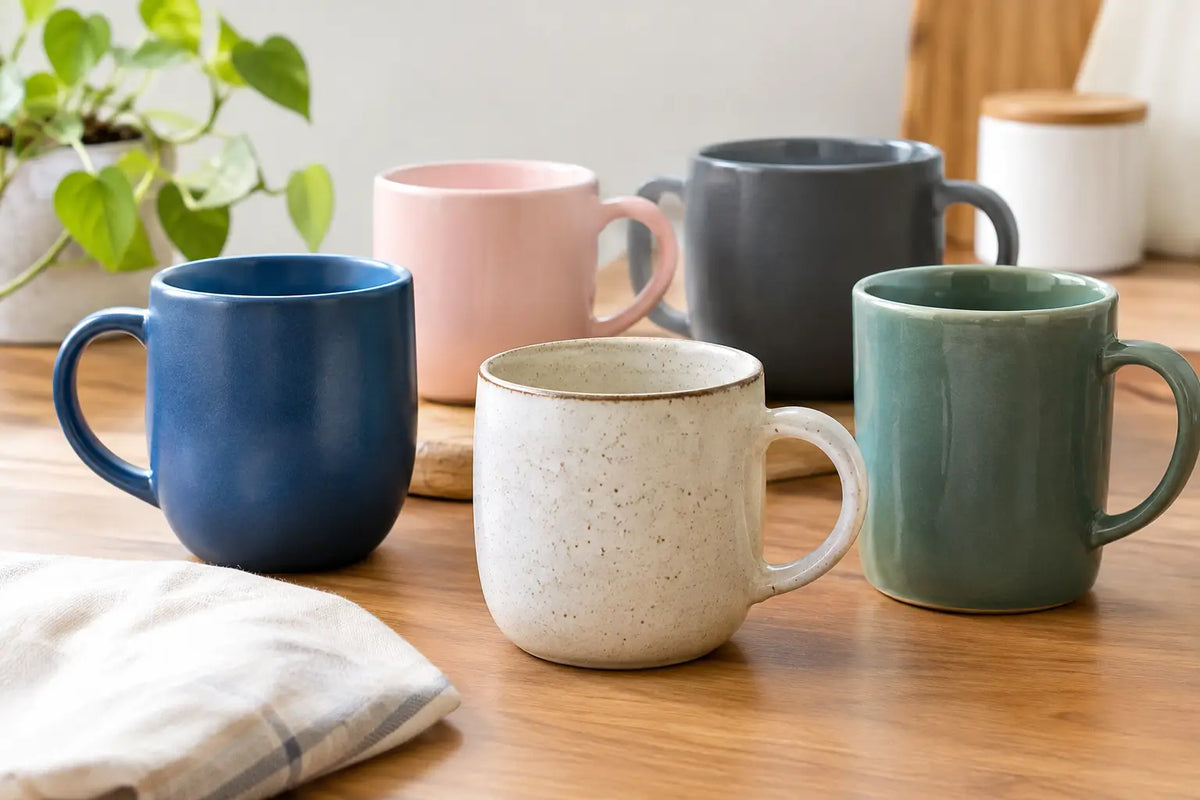
Before choosing, think beyond the standard dinner plate. The most useful sets reflect what you actually serve. If soup, oatmeal, and grain bowls are weekly staples, prioritize generously sized bowls. If you tend to eat sandwiches, salads, and smaller lunches, salad plates may get more use than you expect. Mugs matter, too: a beautiful mug should feel balanced in the hand and hold enough coffee or tea for your usual morning routine.
A coordinated set creates easy visual order, but there is no rule that every piece must match. A reactive-glaze dinner plate can pair beautifully with neutral serving bowls or a simple white platter. This is a practical way to build a more flexible table over time without making every meal feel overly styled.
Check the Everyday-Care Details Before Ordering
Many reactive-glaze stoneware collections are dishwasher-safe and microwave-safe, but those claims should be confirmed for the specific product. Do not assume that all ceramics share the same care instructions. Metallic accents, unusual finishes, and handmade details can change what a piece can handle.
Even durable dinnerware benefits from a little care. Avoid severe temperature changes, such as moving a chilled dish directly into a very hot oven, unless the manufacturer specifically states it is oven-safe. Do not stack pieces roughly in a crowded sink, where rims can knock together. If gray utensil marks appear on a light glaze, they are often surface transfer rather than damage and can usually be addressed with a gentle ceramic-safe cleaner.
For online purchases, packaging and replacement support deserve the same attention as the glaze. Ceramics travel well when they are packed thoughtfully, but accidents can happen in transit. A clear breakage-replacement policy removes much of the uncertainty from buying fragile tableware online. HomeVss, for example, offers free replacement immediately for qualifying breakage, so you can choose a design you love without treating delivery as a gamble.
Buy for the Table You Use, Not Just the Table You Imagine
Reactive glaze performs best when it is brought out often. It can make a casual breakfast feel warmer, give a simple roast chicken more presence, and create an inviting backdrop for a holiday meal without requiring formal china. The color variation does much of the styling work for you.
If you entertain, select a collection with enough serving flexibility to carry a full meal. Dinner plates, salad plates, bowls, and mugs cover daily needs, while larger serving bowls, platters, or pasta bowls make hosting easier. Consider whether the pieces can move from a weekday meal to a birthday dinner with only a change of linens and flowers.
The right reactive-glaze set should not ask you to save it for special occasions. Choose a color that still feels good on an ordinary Tuesday, a material that can keep up with your kitchen, and a safety standard you can trust. When dinnerware is both beautiful and genuinely usable, the table becomes one of the simplest ways to make home feel more intentional.


Hinterlasse einen Kommentar
Diese Website ist durch hCaptcha geschützt und es gelten die allgemeinen Geschäftsbedingungen und Datenschutzbestimmungen von hCaptcha.