


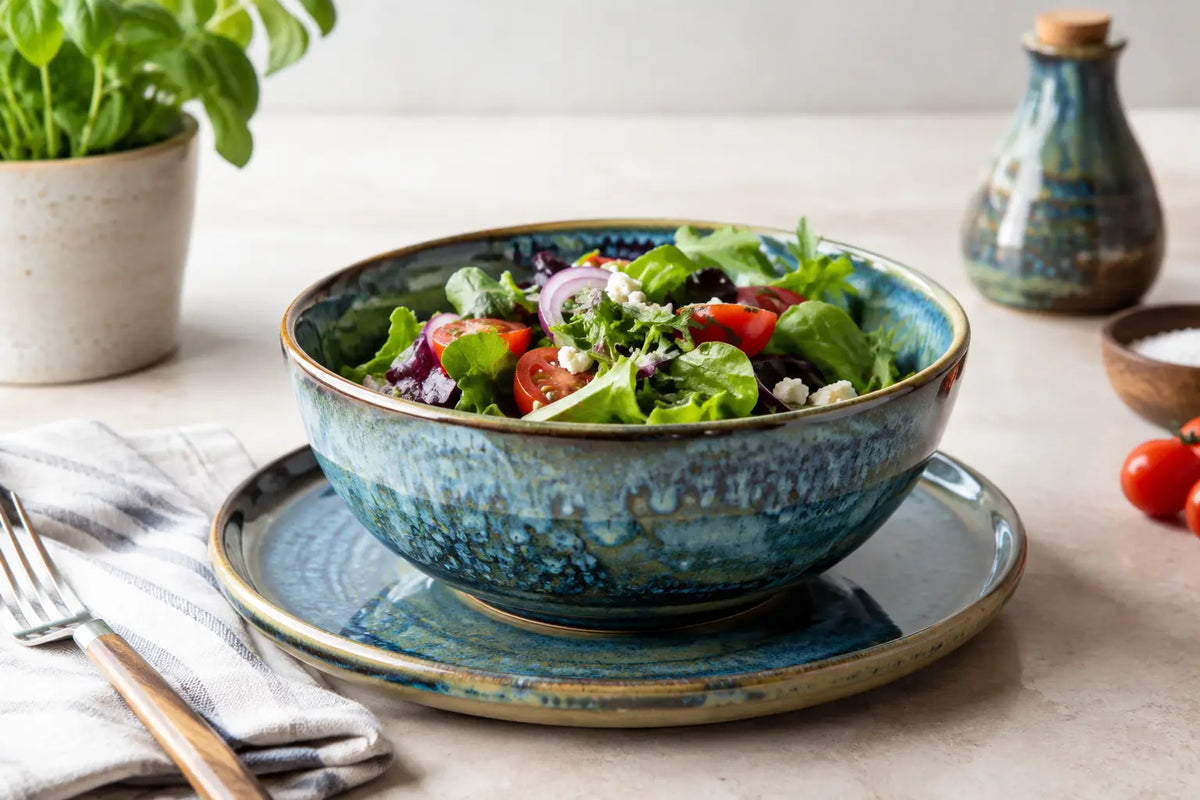
A reactive-glaze dinner plate can look almost too beautiful to use: pooled color at the rim, subtle speckles, and a finish that shifts gently from one piece to the next. That visual character often raises a practical question at the point of purchase: is reactive glaze food safe? For well-made, properly fired dinnerware intended for food contact, the answer is generally yes. But safety depends on the ceramic, the glaze formulation, the firing process, and how the finished piece is meant to be used.
The reassuring part is that reactive glaze is not a material category that is automatically risky. It is a glazing technique. A quality maker can create its signature variation while still meeting strict lead- and cadmium-free standards for everyday tableware. The key is choosing pieces made for serving food, rather than assuming every handmade-looking ceramic item belongs on the dinner table.
Is Reactive Glaze Food Safe? The Short Answer
Reactive glaze is food safe when it is formulated, applied, and fired for food-contact use. During the kiln firing, minerals in the glaze interact with heat and one another, producing the layered colors, speckles, and flowing edges that make reactive stoneware distinctive. The final surface should be smooth, stable, and bonded to the ceramic body.
A plate's color variation does not mean its glaze is unfinished or unstable. In fact, the best reactive finishes are carefully controlled through clay selection, glaze chemistry, firing temperature, and kiln placement. Each piece may have an individual pattern, but it should still meet the same safety and performance expectations.
What matters most is the manufacturer's testing and quality standards. Dinnerware advertised as lead- and cadmium-free and made specifically for eating and drinking is a far better choice than an unmarked decorative vessel, flea-market find, or craft piece with an unknown history. Health and safety are non-negotiable, particularly for dishes used every day by families.
What Makes a Ceramic Glaze Safe for Food?
Ceramic safety is about more than whether a glaze looks glossy. A food-safe surface should resist releasing harmful substances into food under normal use. It should also hold up to washing, acidic foods, moisture, and the ordinary wear of meals shared at home.
High-temperature firing plays a central role. Stoneware fired at high temperatures, often up to 1200°C, becomes dense and durable, while the glaze fuses to the surface. This helps create the polished, nonporous finish people expect from quality dinnerware. A properly matured glaze is less likely to absorb food odors, stain easily, or deteriorate quickly with routine use.
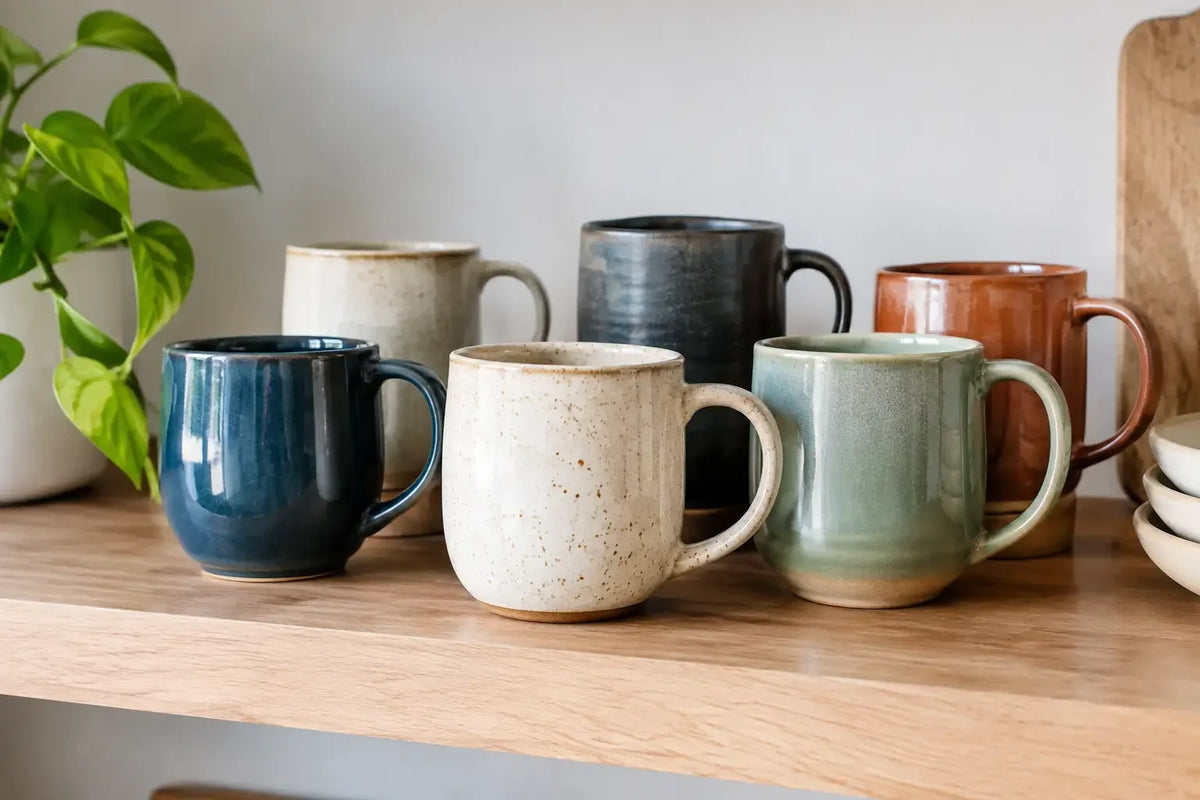
Lead and cadmium deserve special attention because they are the substances shoppers most often associate with ceramic safety. Responsible dinnerware makers formulate and test their food-contact products to be lead- and cadmium-free. Do not rely on appearance alone: a rich cobalt blue, warm rust, or deep green glaze is not inherently unsafe, nor is a pale neutral glaze automatically safe. Documentation, labeling, and a maker's stated standards are much more meaningful than color.
Reactive Glaze Variation Is a Design Feature, Not a Defect
Reactive glazes are prized because no two pieces develop exactly the same way in the kiln. One bowl may have more movement around the rim, while another shows a softer center or a slightly deeper shade. That character gives a table setting warmth and visual depth without making every place setting look copied from a factory line.
Variation does come with a trade-off. If you prefer every plate to match exactly, a solid-color porcelain or bone china collection may be the better fit. Reactive stoneware is for the home that appreciates a coordinated look with individual personality.
The variation should remain cosmetic, however. It should not include rough bare patches in the eating surface, sharp edges, flaking glaze, or cracks that catch a fingernail. A handmade appearance is not a reason to accept poor finishing. Quality tableware should feel as refined in the hand as it looks on the table.
When to Be More Careful With Glazed Ceramics
Most new dinnerware from a reputable retailer is designed with routine meals in mind. Extra caution is sensible when an item's origin, age, or intended use is unclear. Vintage ceramics, imported souvenirs without food-use information, studio pieces sold as decor, and old chipped dishware can require a different standard of care.
Look closely at the product description or packaging. It should identify the piece as dinnerware, drinkware, or otherwise suitable for food contact. If a maker says an item is decorative only, use it for flowers, keys, or display rather than fruit, salad, soup, or coffee.
Crazing also deserves context. Crazing is the network of fine lines that can develop in some glazed ceramics when the glaze and clay body expand differently over time. It is not always immediately dangerous, but it can make a surface harder to clean and more likely to hold moisture or food residue. For everyday plates, bowls, and mugs, a smooth, intact glaze is the more practical and hygienic choice.
Retire any piece with substantial chips, peeling glaze, deep cracks, or damage around the rim. A small chip may seem cosmetic, but it can create a difficult-to-clean edge and reduce the dish's strength. Replacing a damaged everyday piece is usually a better choice than trying to extend its life at the table.
How to Choose Reactive Dinnerware With Confidence
A little scrutiny before buying can make a beautiful set an easy everyday decision. Consider these four signals together:
- Clear food-safety language: Choose dinnerware explicitly described as lead- and cadmium-free and intended for food use.
- High-fired construction: High-fired stoneware offers the density and durability families want from daily plates, bowls, and mugs.
- A smooth, complete finish: The eating and drinking surfaces should feel even, without rough patches, cracks, or loose glaze.
- Care instructions that match your routine: Dishwasher- and microwave-safe guidance can be useful for busy households, provided you follow the maker's recommendations.
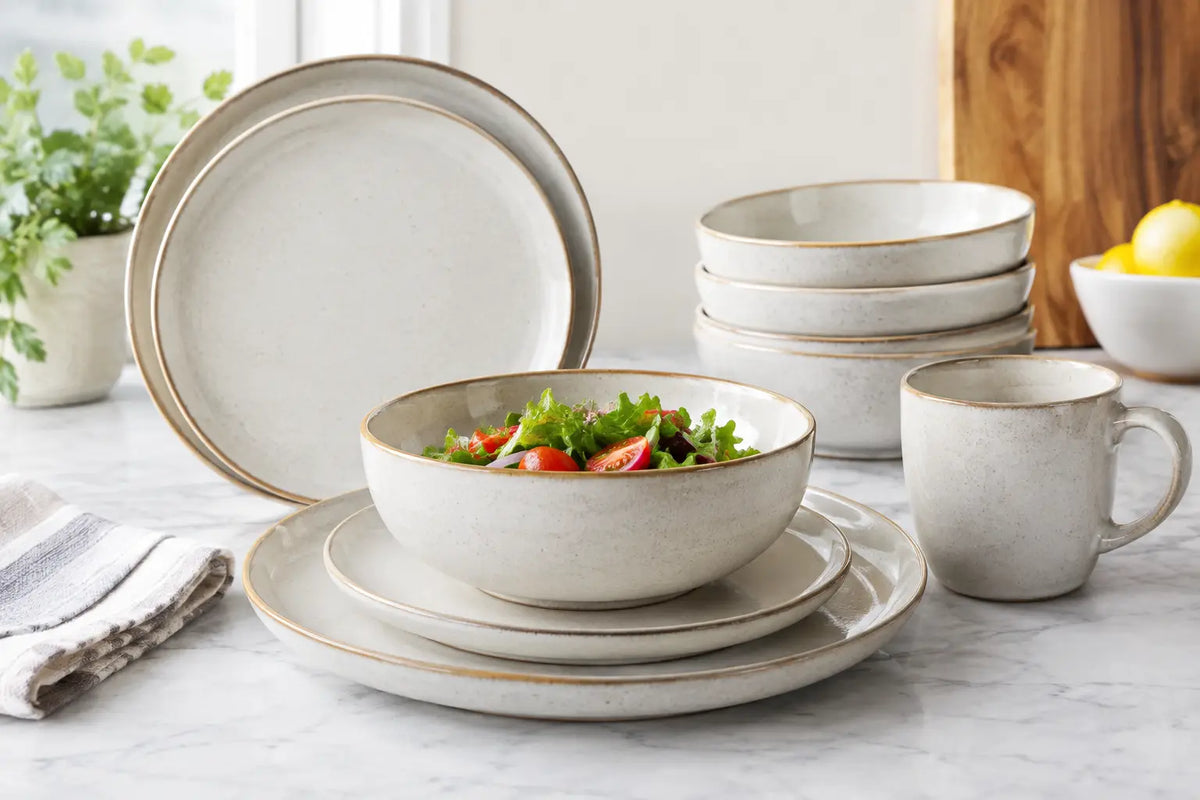
At HomeVss, reactive-glaze stoneware is designed to bring one-of-a-kind kiln character to meals without turning dinnerware into a special-occasion-only purchase. The goal is elevated visual design supported by high-fired construction and 100% lead- and cadmium-free standards, so a weeknight pasta dinner can feel as considered as a holiday table.
Care Helps Preserve Both Beauty and Performance
Even durable dinnerware benefits from a few straightforward habits. Avoid sudden temperature changes, such as moving a cold dish directly into a very hot oven or running a hot plate under cold water. Thermal shock can stress ceramic bodies and glazes, regardless of whether the piece has a reactive finish.
Use nonabrasive sponges for routine cleanup, especially on matte or textured areas. Harsh scouring can gradually dull the finish. If dishwasher safe, give pieces enough space that they do not knock together during the cycle. For microwaves, avoid using dishes with metallic accents unless the maker specifically says they are microwave safe.
Staining from tomato sauce, tea, coffee, or turmeric is less likely on a well-fired glazed surface, but prompt washing is still wise. If a piece develops persistent staining, cracking, or a surface that no longer feels smooth, set it aside and assess whether it is still appropriate for food use.
Reactive glaze earns its place in an everyday collection because it brings the artistry of the kiln to the meals that actually matter. Choose dinnerware with clear safety standards, treat it with sensible care, and let every naturally varied piece make ordinary gatherings feel a little more intentional.


Hinterlasse einen Kommentar
Diese Website ist durch hCaptcha geschützt und es gelten die allgemeinen Geschäftsbedingungen und Datenschutzbestimmungen von hCaptcha.