


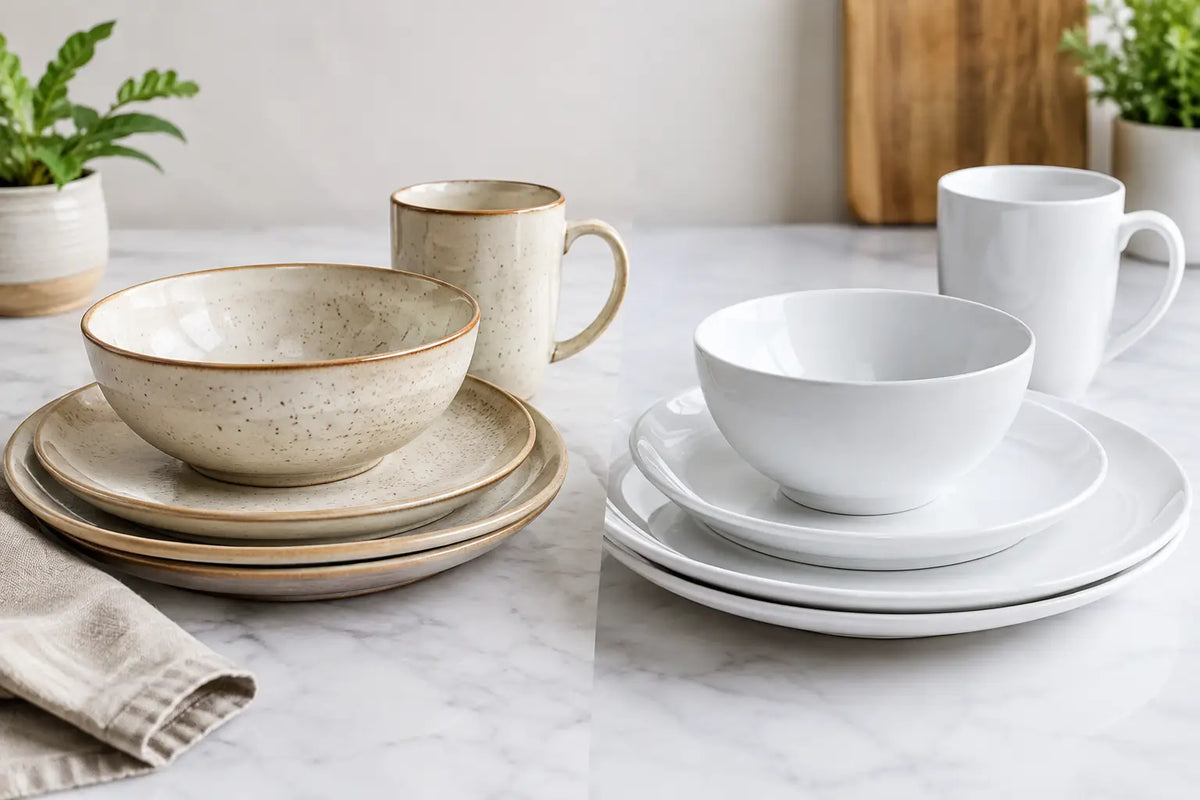
The difference between ceramic versus porcelain dinnerware becomes clear the moment you set the table. One plate may feel warmly substantial, with a hand-finished glaze that makes a weeknight meal feel considered. Another may be light, luminous, and refined enough for a holiday place setting. Neither is automatically better. The right choice depends on how you eat, host, clean up, and want your home to feel every day.
For most homes, the decision is less about choosing a “good” material over a “better” one and more about matching craftsmanship to real life. A family serving pasta, cereal, and takeout on the same set needs different qualities than a couple building a formal registry or a frequent host setting a polished table for eight.
Ceramic Versus Porcelain Dinnerware: The Core Difference
Ceramic is the broad category. It describes tableware made from natural clay that is shaped, glazed or left unglazed, and fired in a kiln. Stoneware, earthenware, porcelain, and bone china all sit within the larger world of ceramics, although they differ substantially in clay composition, firing temperature, density, and finish.
Porcelain is a specific type of ceramic, traditionally made with fine clay materials including kaolin and fired at very high temperatures. That firing process produces a dense, vitrified body with low porosity. In practical terms, porcelain tends to be smooth, nonporous, relatively lightweight, and elegant in appearance. Many porcelain pieces have a clean white body and a subtle translucency when held to the light.
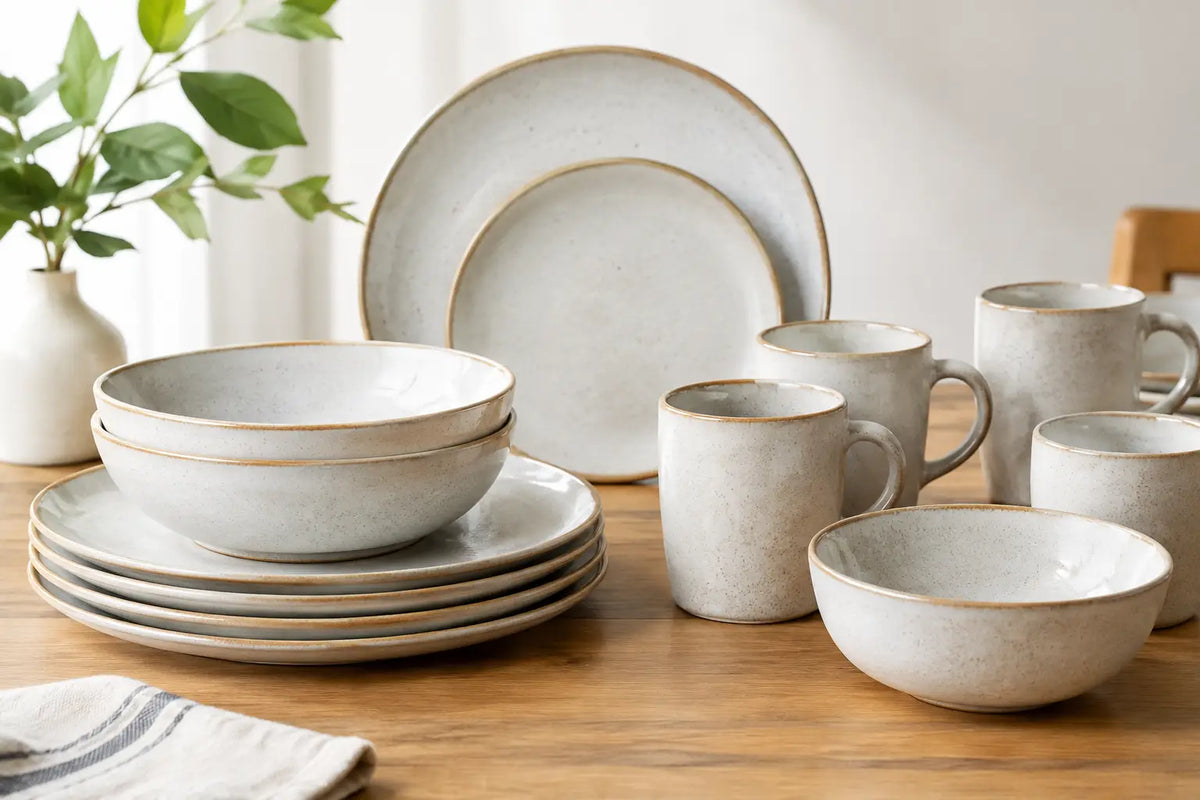
Stoneware is also a high-fired ceramic, but it is generally thicker and more substantial than porcelain. It is beloved for its grounded feel, gentle curves, rich colors, and handcrafted character. High-quality stoneware can be exceptionally capable for daily use, particularly when it is fired at high temperatures and finished with a durable glaze.
The label “ceramic dinnerware” can therefore mean several things. When comparing it with porcelain, ask whether the ceramic set is stoneware or earthenware, how it was fired, and whether the maker specifies everyday-use features such as dishwasher and microwave safety.
Why Stoneware Feels So Right for Daily Meals
Stoneware has a reassuring presence on the table. Its weight helps it feel stable in the hand, while its depth and softly organic shapes suit soups, grain bowls, shared salads, and generous home-cooked meals. It brings an easy sense of occasion without asking you to save it for special guests.
It is also a natural choice for people who want their dinnerware to carry some visual personality. Reactive glazes create variation during firing, so no two pieces are precisely alike. Color may deepen around a rim, pool gently in the center of a bowl, or shift subtly from one plate to the next. That variation is part of the appeal, not a flaw. It gives the table a collected, artisan quality while still allowing a coordinated set to feel cohesive.
Durability depends on construction, not simply thickness. Well-made, high-fired stoneware is dense and designed to stand up to everyday handling. A plate that looks artisanal should still be practical enough for breakfast before work, family dinners, and a full dishwasher at the end of the evening. As with any dinnerware, avoiding sudden temperature changes helps protect the glaze and body over time. Do not move a chilled dish directly into a hot oven unless the manufacturer explicitly approves it for oven use.
Stoneware is often the better fit when you want one set that can handle nearly everything: casual meals, birthday dinners, weekend brunches, and thoughtful housewarming gifts. Its visual warmth also works beautifully in open kitchens, where dishes are often visible on shelves or through glass-front cabinets.
Where Porcelain Shines
Porcelain earns its place through refinement and versatility. Because it is dense yet often thinner than stoneware, it can look delicate without necessarily being fragile. A well-made porcelain plate has a crisp profile that lets food take center stage, whether you are serving a simple salad or a carefully planned holiday menu.
Its smooth, low-porosity surface is another practical advantage. Porcelain is generally resistant to absorbing odors, moisture, and stains when properly glazed. It is easy to wipe clean, and many porcelain dinnerware collections are suitable for dishwasher and microwave use. Always confirm the care guidance for a specific piece, particularly when it includes metallic details, hand-painted decoration, or an unusually textured finish.
Porcelain is especially appealing for hosts who prefer a more tailored table. White or softly toned porcelain layers easily with linen napkins, colorful glassware, serving boards, and seasonal centerpieces. It can read as quietly formal, but it does not have to feel stiff. Pair it with relaxed textiles and fresh flowers, and it becomes an inviting everyday backdrop.
Fine bone china is worth mentioning here because it often appears alongside porcelain in dinnerware shopping. It is a refined ceramic material known for a creamy tone, light weight, and impressive strength for its thin profile. For wedding registries, anniversary gifts, and formal entertaining, it offers an elevated option that still deserves regular use rather than permanent cabinet storage.
Compare the Details That Matter at Home
The choice between ceramic and porcelain is easiest when you picture the dishes in motion. Think about the cabinet, the sink, the dishwasher, the table, and the people using them.
Stoneware generally feels heavier and more relaxed. Its depth and tactile finish make it a favorite for hearty, informal meals and design-forward kitchens. Porcelain generally feels lighter, smoother, and more classic. It suits people who appreciate clean lines, polished place settings, and a plate that layers easily with other table pieces.
For families, chip resistance and safety standards should carry more weight than an overly narrow focus on material names. Look for dinnerware made for repeated use and clearly identified as 100% lead and cadmium-free. Health and safety are non-negotiable, especially for the bowls and mugs used every day by children, guests, and the people you love.
For renters or first-time homeowners, consider storage and replacement needs. A complete stoneware set can create an instant sense of home, but its larger profile may take more cabinet room. Porcelain can be easier to stack and often works across many decorating styles as your space evolves. If you are buying online, a clear breakage-replacement policy also matters. Beautiful dinnerware should arrive ready to enjoy, not create an extra customer-service task after delivery.
Care Habits That Protect Both Materials
Porcelain and high-fired stoneware are made for regular use, but a few simple habits preserve their finish. Let hot pieces cool before rinsing them under cold water, and avoid striking plate edges together when loading the dishwasher. Use separators or soft liners if you stack pieces in a crowded cabinet, especially if a collection has a textured glaze or an unglazed foot ring.
Use the dishwasher settings recommended by the manufacturer, and leave enough space between larger plates and bowls so water can circulate without pieces knocking together. For stubborn marks from flatware, a gentle nonabrasive cleaner is usually preferable to harsh scouring pads. Matte and reactive glazes may show normal signs of use differently than glossy white porcelain, which is one reason their care instructions deserve a quick read before the first wash.
If a piece chips, retire it from food service if the damaged edge feels sharp or the glaze is compromised. A small chip may seem cosmetic, but dinnerware is part of daily food contact and should remain comfortable and safe to use.
Which Dinnerware Should You Choose?
Choose stoneware when you want tactile character, rich glaze variation, a substantial feel, and a collection that makes everyday meals look more intentional. It is an especially strong choice for casual hosts, busy households, and anyone drawn to a table with warmth and texture.
Choose porcelain when you prefer a lighter feel, clean silhouettes, easy layering, and a more classic presentation. It is ideal for refined entertaining, flexible registry pieces, and homes where one dinnerware set needs to move easily from Tuesday dinner to Thanksgiving dessert.
Many well-lived-in homes make room for both. Stoneware can be the dependable workhorse for breakfast, family dinners, and relaxed gatherings, while porcelain or fine bone china can bring a lighter, more polished note to celebrations. HomeVss designs its dinnerware around that same belief: elevated design should support daily living, not wait for a rare occasion.
The best set is the one you will reach for often, trust with the people around your table, and still be pleased to see after the meal is over.


Hinterlasse einen Kommentar
Diese Website ist durch hCaptcha geschützt und es gelten die allgemeinen Geschäftsbedingungen und Datenschutzbestimmungen von hCaptcha.