

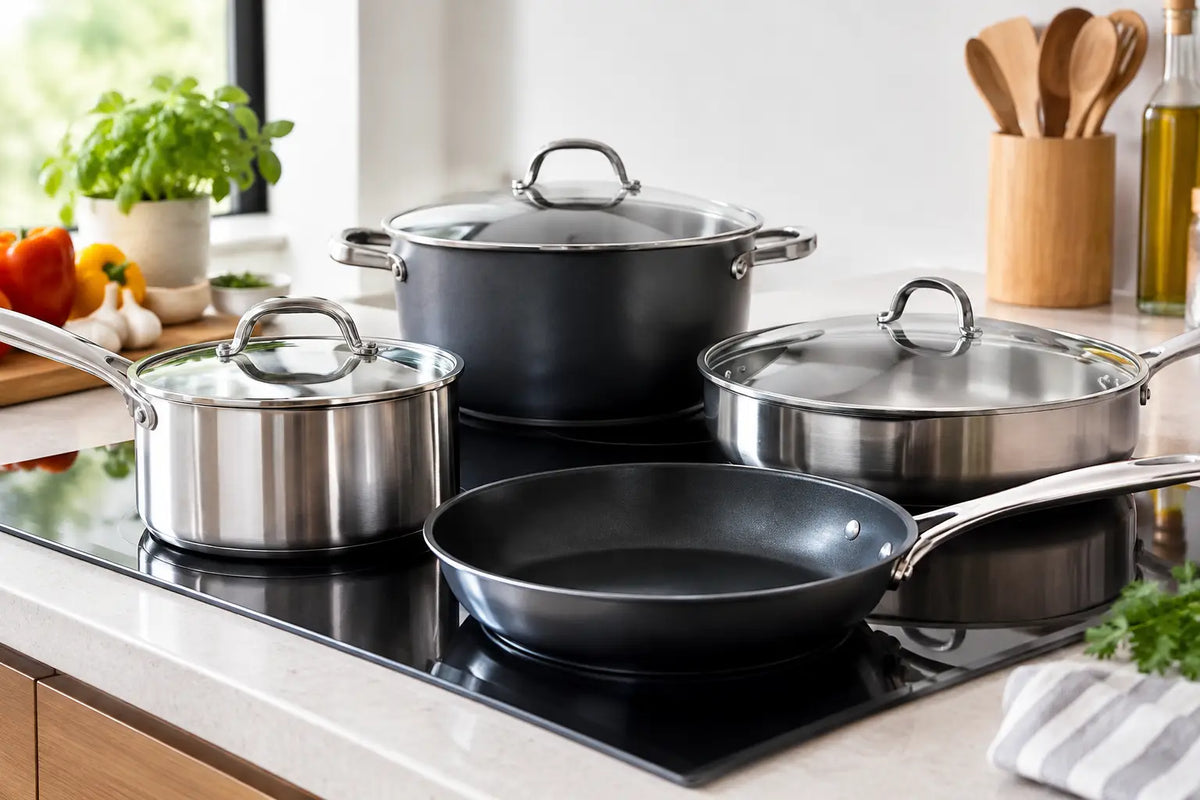
A new induction range changes the feel of a kitchen almost immediately. Water boils quickly, sauces respond the moment you lower the heat, and the smooth cooktop is pleasingly easy to wipe clean. But it also asks one practical question: which pans will actually work? The best cookware for induction stoves is not necessarily the most expensive set or the pan with the heaviest base. It is cookware with enough magnetic material at the bottom to connect reliably with the cooktop, while still fitting the way you cook, serve, and care for your kitchen.
For most homes, the strongest choice is a thoughtful mix rather than one matching set. Stainless steel can handle weekday sautéing and sauce-making. Enameled cast iron brings steady heat and presentation-worthy cooking to the table. A well-made nonstick skillet can still earn its place for delicate eggs and pancakes. The goal is a kitchen that feels considered, useful, and ready for both Tuesday dinner and a full table of guests.
What Makes Cookware Work on Induction?
Induction cooktops heat a pan through a magnetic field rather than heating the surrounding surface first. This is why a pan needs a magnetic base. Cast iron and most carbon steel are naturally compatible. Many stainless steel pans work beautifully, but only when they contain magnetic stainless steel or have a bonded magnetic layer in the base.
The simplest test is a household magnet. If it sticks firmly to the bottom of the pan, the pan should work on an induction burner. A weak attachment can mean uneven performance, especially at higher settings. Aluminum, copper, glass, and ceramic cookware alone are not magnetic, although pans made from those materials may be induction-ready when they include a magnetic stainless steel base.
Compatibility is only the starting point. Flatness matters, too. An induction cooktop needs close contact with the pan base, so a warped skillet may heat inconsistently or make a faint buzzing sound. Choose cookware with a level bottom that matches the size of your most-used burner.
Best Cookware for Induction Stoves by Material
Enameled Cast Iron for Slow, Steady Cooking
Enameled cast iron is one of the most satisfying materials for induction cooking. Its iron core responds to the magnetic field, while its substantial weight holds heat well. That combination makes it especially useful for browning short ribs, simmering soup, baking no-knead bread, and building a deeply flavored one-pot meal.
A Dutch oven also moves naturally from stovetop to oven to table. Its enamel finish removes the need for seasoning and gives you a nonreactive surface for tomato sauces, braises with wine, and citrus-forward dishes. For a home that values both everyday durability and a polished serving moment, this is cookware that earns visible shelf space.
There is a trade-off. Cast iron takes longer to warm through than a thin stainless steel skillet, and it is heavy. Lift it with two hands when full, avoid sliding it across a glass cooktop, and allow it to cool before washing. A quality enameled cast-iron Dutch oven or skillet can last for years with this simple care.
Stainless Steel for Everyday Versatility
Stainless steel is the dependable workhorse of an induction kitchen. It excels at searing chicken, sautéing vegetables, reducing pan sauces, boiling pasta, and cooking foods where you want to see and control browning. Look for fully clad construction or a heavy, bonded base designed specifically for induction. These designs spread heat more evenly than a thin, single-layer pan.
Stainless steel rewards a little technique. Preheat the pan on medium rather than blasting it on high, then add oil once the surface is warm. Food is less likely to stick when the pan and oil are properly heated. Induction is fast, so medium heat often does the work that high heat did on an older electric or gas range.
For shoppers building a first collection, a stainless steel saucepan, stockpot, and 10- or 12-inch skillet provide tremendous range. Choose securely riveted handles and snug-fitting lids. Those small construction details matter when cookware becomes part of your daily rhythm.
Carbon Steel for High-Heat Searing
Carbon steel is a strong option for cooks who love a hard sear, quick stir-fry, or restaurant-style skillet cooking. It is magnetic, oven-safe at high temperatures, and generally lighter than cast iron. Over time, a properly seasoned carbon steel pan develops a naturally slick cooking surface.
Its character is part of the appeal, but it is not for everyone. Carbon steel needs seasoning and should be dried promptly to prevent rust. Acidic foods can disturb a newer seasoning layer, so it is less convenient for long-simmered tomato dishes. If you enjoy maintaining cookware as it develops a personal patina, it can become a favorite. If you want easy cleanup and zero special handling, enameled cast iron may be a better fit.
Induction-Compatible Nonstick for Delicate Foods
Nonstick cookware remains useful for eggs, crepes, flaky fish, and other foods that benefit from a gentle release. For induction, confirm that the pan is explicitly labeled compatible and has a stable, magnetic base. A heavier pan tends to sit more securely and heat more evenly than a lightweight model.
Use low to medium heat, even if your cooktop can go much higher. High heat shortens the life of most nonstick coatings and is rarely necessary on induction. Silicone, wood, or nylon utensils help protect the surface. Nonstick is best treated as a specialized pan, not the only cookware in the kitchen.
How to Choose the Right Pieces
Start with the meals you cook most often. A household that makes soups, roasts, and family-size pasta will get more value from a Dutch oven and stockpot than from a large set of specialty pans. A couple cooking simple weeknight meals may need only a skillet, saucepan, and lidded sauté pan.
Pay attention to weight and handle comfort. Heavier cookware can offer excellent heat retention, but it should still feel manageable when you are draining vegetables or transferring dinner to the oven. Long handles should stay reasonably cool on the stovetop, and helper handles are particularly welcome on larger skillets and Dutch ovens.
Consider your cooktop surface as well. Smooth glass induction tops are durable but benefit from considerate use. Lift cookware rather than dragging it, keep the base clean and dry, and avoid cookware with rough, unfinished bottoms. Cast iron is compatible, but its weight calls for a gentler hand.
A few signs of well-chosen induction cookware are worth keeping in mind:
- A magnetic, flat base that makes firm contact with the cooktop
- Enough thickness to resist hot spots and warping
- Comfortable handles and lids that suit your cooking habits
- Clear oven-temperature guidance and straightforward care instructions
- Pieces you will use often, rather than a cabinet full of duplicates
A Practical Induction Cookware Collection
For most kitchens, begin with a 10- or 12-inch stainless steel skillet, a 2- or 3-quart saucepan, and a larger lidded pot for pasta, grains, and soup. Add an enameled cast-iron Dutch oven when you want the flexibility to braise, bake, and serve from the same beautiful vessel. A small induction-compatible nonstick pan rounds out the collection for breakfast and delicate ingredients.
This approach is often more useful than buying a large boxed set. It lets you choose each material for its strengths and leaves room for the pieces that reflect your style. A richly colored cast-iron casserole, for example, can bring the same sense of warmth to a dinner party as it does to a Sunday stew. HomeVss cast-iron cookware is designed with that balance in mind: dependable cooking performance paired with a finish worthy of the table.
Care Tips That Protect Your Cooktop and Cookware
Induction heat is immediate, so let the pan guide your settings. Begin lower than you think you need, particularly with cast iron and clad stainless steel. Increase gradually. This helps prevent scorching, preserves nonstick surfaces, and gives you better control over sauces and browning.
Keep pan bottoms clean. A film of oil or burnt-on residue can interfere with close contact and leave marks on the cooktop. After cooking, let cookware cool before washing, especially enameled cast iron. Sudden temperature changes can be hard on enamel and may affect the flatness of lighter pans.
The best cookware is the cookware you reach for without hesitation. Choose materials that suit your favorite meals, care for them with a little consistency, and let each piece make everyday cooking feel more generous, composed, and inviting.


Hinterlasse einen Kommentar
Diese Website ist durch hCaptcha geschützt und es gelten die allgemeinen Geschäftsbedingungen und Datenschutzbestimmungen von hCaptcha.