

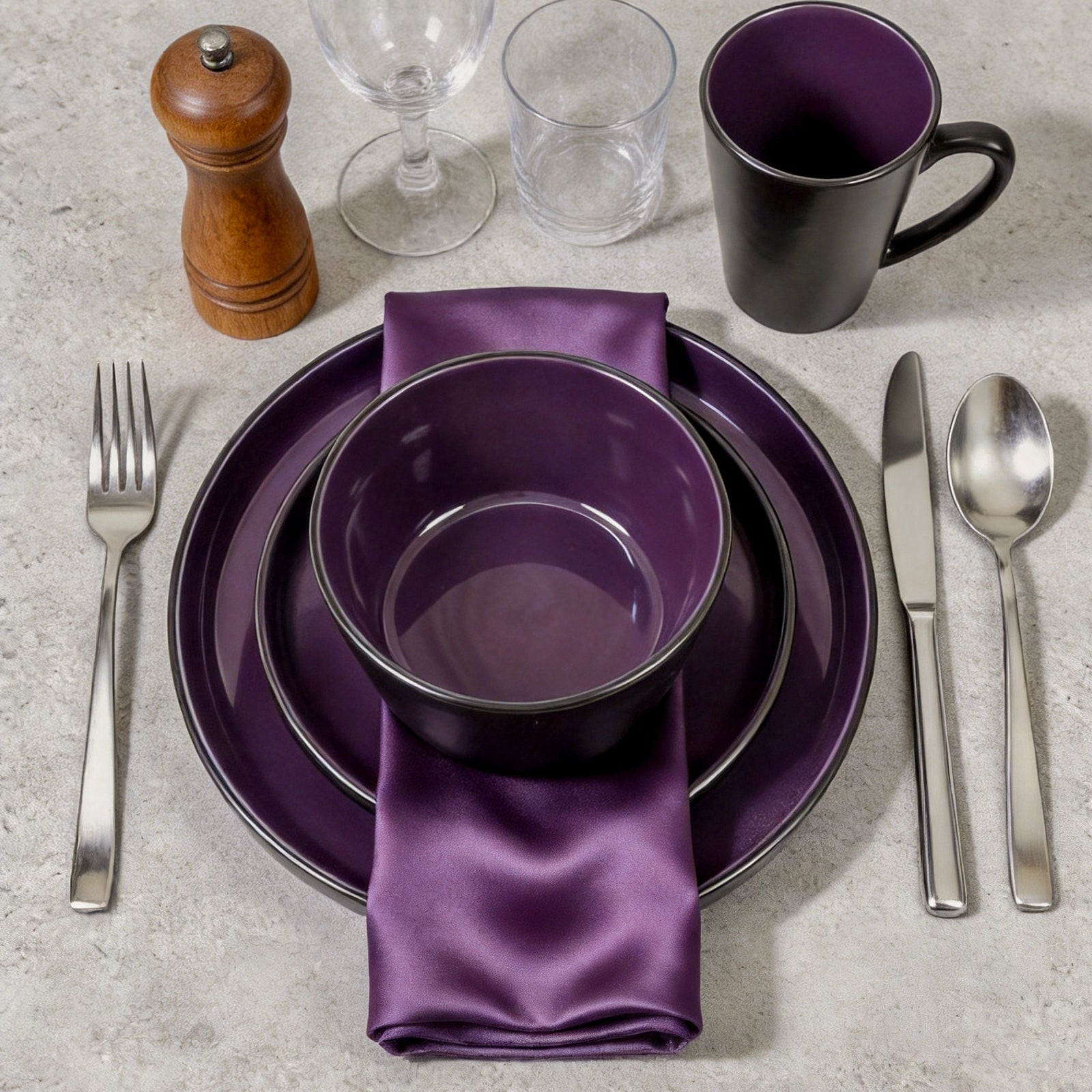
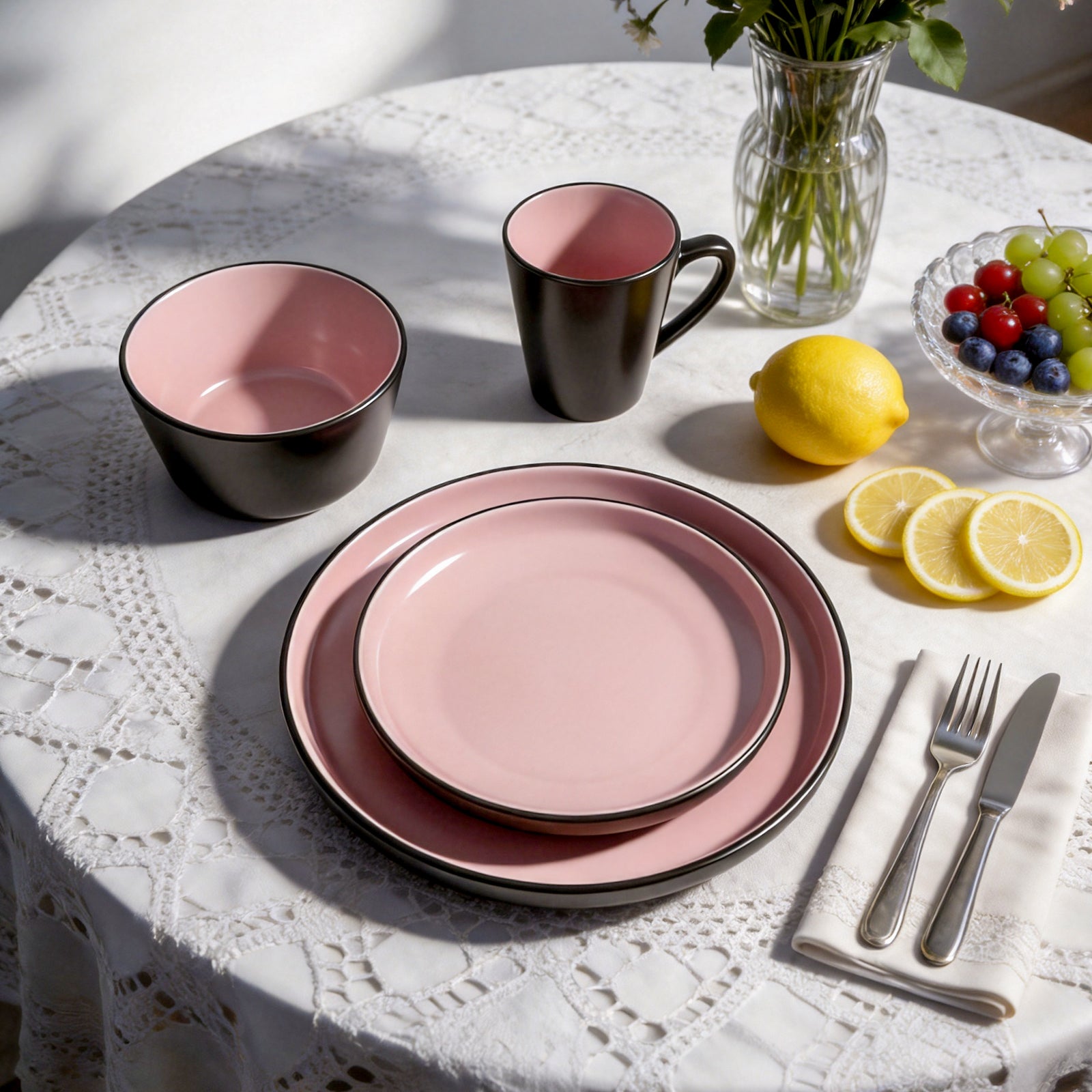
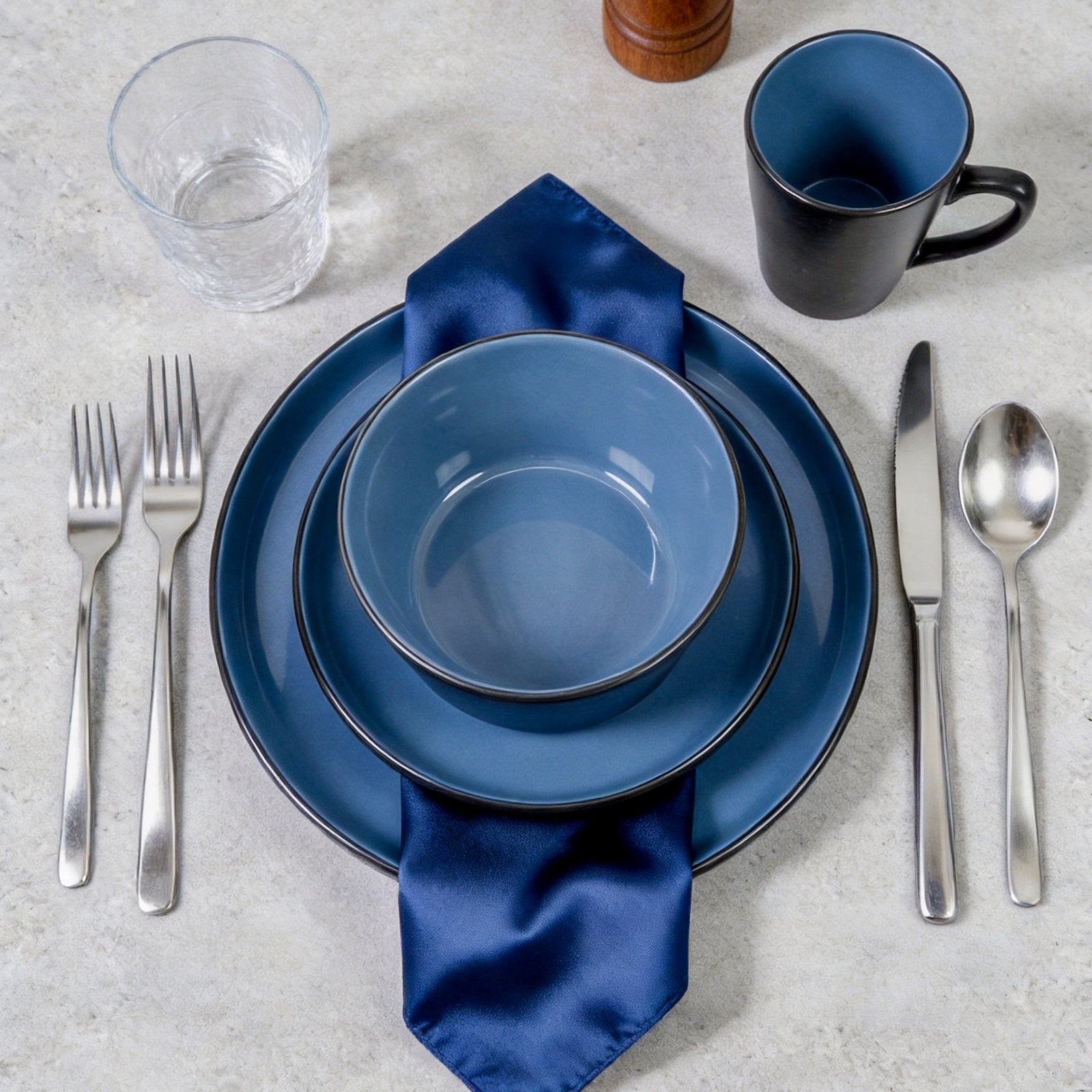

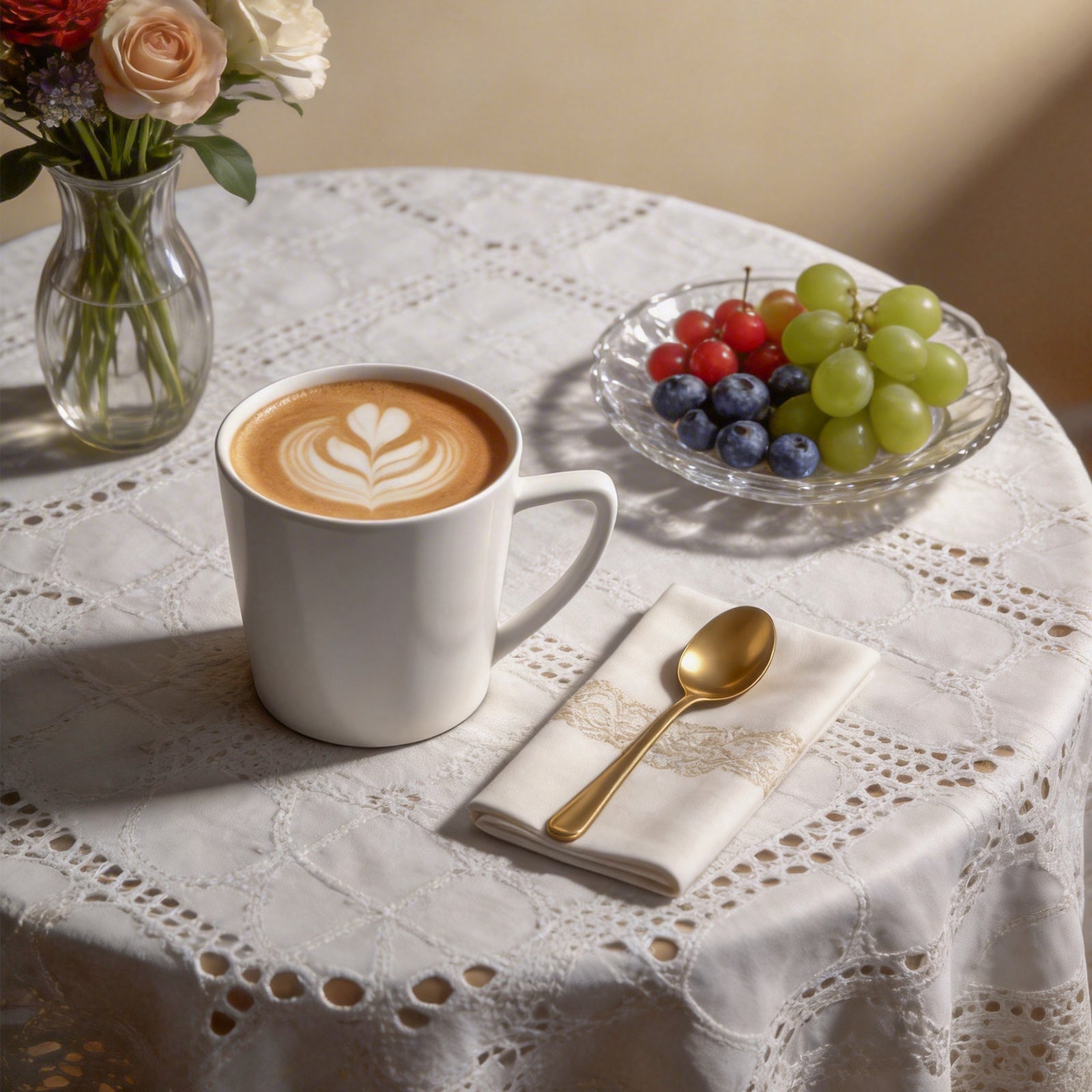

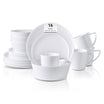
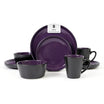

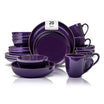

A beautiful dinner plate should not come with unanswered questions. Ceramic food safety is about more than whether a bowl looks polished on an open shelf or survives the dishwasher. It is about the clay body, the glaze, the firing process, the testing behind the finished piece, and the way you use it at home.
For families, hosts, and anyone building a more intentional table, safe dinnerware should feel straightforward: made for food, made to last, and clearly described by the brand selling it. The details matter because ceramics are not all made to the same standard.
What Ceramic Food Safety Actually Means
Food-safe ceramic dinnerware is formulated and finished so that harmful substances do not transfer from the surface into food or beverages during normal use. The biggest concerns are traditionally lead and cadmium, which can be present in some pigments and glazes. In the United States, food-contact ceramicware is subject to limits for lead and cadmium release, often called leachability limits.
That word matters. A glaze may contain ingredients that are safely locked into its glasslike surface after proper firing, but a finished product still needs to be evaluated for what can migrate into food. Responsible makers test the finished ware, rather than relying only on a raw-material description or a glaze’s appearance.
A clear lead- and cadmium-free claim provides useful reassurance, especially for plates, bowls, mugs, and serving pieces used every day. It should be paired with plain product information: Is the item intended for food? Is it made for hot drinks? Is it dishwasher and microwave safe? When a seller cannot answer basic use questions, it is reasonable to choose another option.
The Materials and Finish Behind Safe Dinnerware
Ceramics cover several materials, from earthy stoneware to delicate-looking bone china. Each can be an excellent choice for the table when it is properly made and glazed for food contact.
High-fired stoneware offers everyday confidence
Stoneware is valued for its substantial feel, warmth, and everyday durability. When fired at high temperatures, the clay becomes dense and less porous, helping the piece stand up to regular meals, hot foods, and repeated washing. High firing also helps the glaze mature into a durable finish.
Still, firing temperature alone is not a blanket food-safety guarantee. A well-made plate depends on the complete system: appropriate clay, a compatible glaze, controlled firing, and finished-product testing. Think of high firing as a meaningful part of quality craftsmanship, not the only proof you need.
Fine bone china can be practical, not precious
Fine bone china is often associated with formal settings, but quality pieces can be a smart daily choice. Its refined profile and bright finish bring a sense of luxury order to breakfast, weeknight dinners, and celebrations alike. As with stoneware, food safety comes down to the finished glaze and the manufacturer’s standards, not simply the material name.
The practical trade-off is personal. Stoneware tends to offer a more relaxed, artisanal presence, while bone china often feels lighter and more formal in the hand. Both can earn a place in a working kitchen when they are expressly made for food use and cared for according to their instructions.
Reactive glazes are safe when they are made and tested correctly
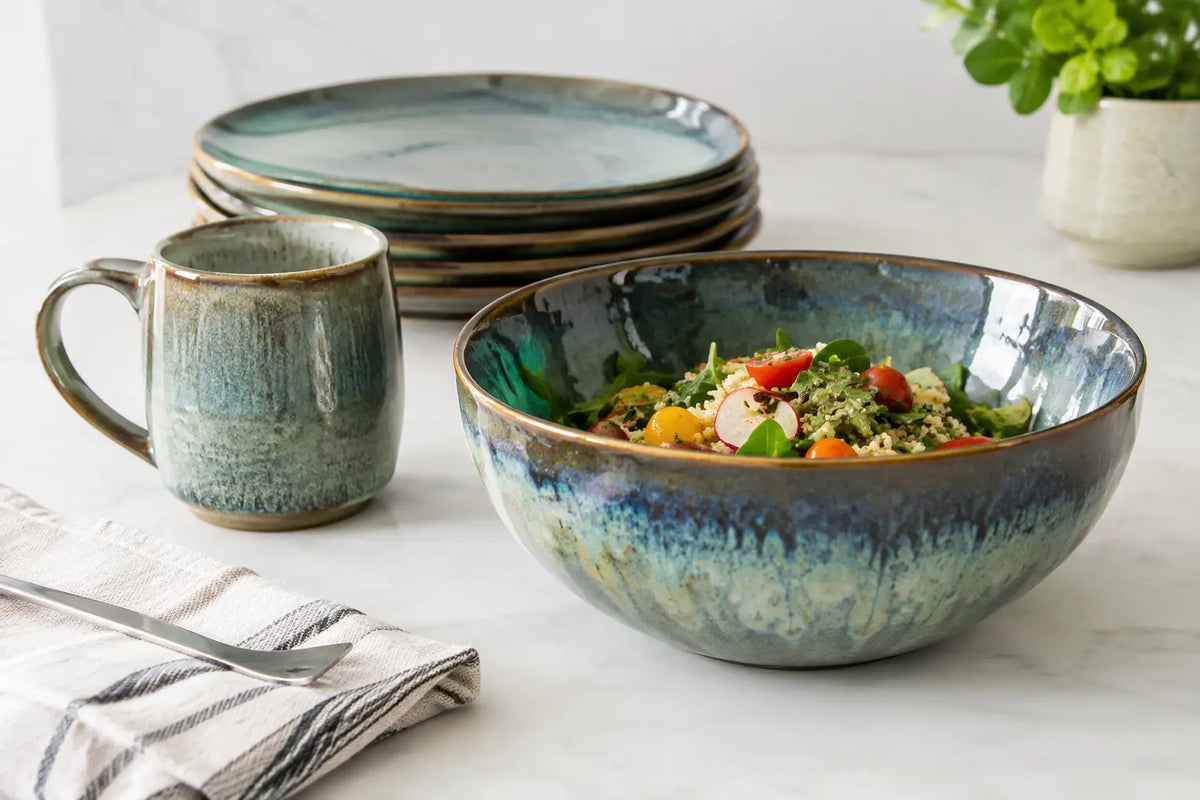
Reactive-glaze dinnerware creates beautiful variation from piece to piece. Mineral interactions in the kiln can produce subtle shifts in color, pooling, speckling, and depth, so no two plates are exactly alike. That individuality is part of the appeal.
A reactive finish does not make a piece less safe. What matters is that the glaze has been developed for food-contact use, fired correctly, and tested as a finished surface. Color alone is not a reliable signal of risk. A deep blue, bright red, glossy black, or softly speckled glaze can all be suitable for the table when made to the right standard.
How to Shop for Safer Ceramicware
The simplest buying rule is to purchase from a seller that treats health and safety as non-negotiable. Look for specific, consistent language rather than vague phrases such as “premium quality” or “artisan-inspired.” A trustworthy product listing should identify the material, confirm intended food use, and provide care guidance that matches the item.
For everyday plates, bowls, and mugs, look for an explicit lead- and cadmium-free statement or confirmation that the dinnerware meets applicable food-contact requirements. If you are shopping for a registry or a gift, this clarity is especially valuable: the recipient should be able to enjoy the piece immediately, without guessing whether it is decorative or practical.
Be more cautious with older, thrifted, imported, handmade, or souvenir ceramics when the maker and intended use are unknown. That does not mean every vintage teacup or hand-thrown bowl is unsafe. It means its history may be difficult to verify. Decorative pottery, especially pieces with an unglazed interior, metallic decoration, or no food-use labeling, is better reserved for flowers, keys, or display until its safety is known.
Home lead test kits can offer a preliminary signal in some situations, but they are not a dependable substitute for professional laboratory testing of glaze leaching. If you have a sentimental or vintage piece you hope to use with food, an accredited lab or local public health resource can offer better guidance.
Safe Use Is Part of the Equation
Even well-made dinnerware deserves sensible care. Use each piece as the manufacturer intends, particularly when heat is involved. “Microwave safe” and “oven safe” are not interchangeable claims. A mug that handles reheating coffee may not be designed for a hot oven, and a plate that is dishwasher safe may still be vulnerable to sudden temperature changes.
Avoid moving ceramicware directly from the refrigerator to a hot oven or placing a very hot piece on a cold, wet surface. Thermal shock can cause cracking. It is also wise to avoid using dinnerware with visible chips, deep cracks, or flaking glaze for food and drinks. Damage can make a surface harder to clean and may expose underlying material.
Crazing deserves a little nuance. These fine, web-like lines in a glaze are not always an immediate safety issue, and some handmade styles intentionally celebrate an aged look. Yet on frequently used dinnerware, widespread crazing can hold stains and moisture over time. For daily meals, a smooth, intact glaze is the easiest surface to clean and maintain.
Acidic foods and drinks, such as tomato sauce, citrus, vinegar-based dressings, wine, and coffee, are another reason quality matters. These foods can be more demanding on a poor-quality or damaged glaze. A tested, properly fired food-safe finish is designed for ordinary kitchen use, including the meals people actually serve.
Care That Protects Your Tableware
Gentle habits help preserve both the beauty and service life of ceramics. Let hot pieces cool before washing, avoid abrasive scouring pads on glossy glazes, and stack plates with care if their rims are especially detailed. If storage space is tight, a soft liner between delicate pieces can prevent surface rubbing.
Dishwasher use is convenient and appropriate for dinnerware labeled dishwasher safe. For pieces with hand-painted decoration, metallic accents, or special finishes, hand washing may be the better choice. Follow the product’s specific care guidance rather than assuming every ceramic item can take the same treatment.
Quality packaging and reliable replacement support matter, too. Ceramics are meant to be enjoyed, but shipping accidents happen. HomeVss pairs design-forward, high-fired dinnerware with 100% lead- and cadmium-free standards and breakage replacement support, so choosing elevated everyday pieces does not have to feel risky.
The best dinnerware invites you to set the table more often - for a quiet lunch, a crowded holiday, or a gift-worthy new beginning. Choose pieces with clear safety standards, keep their surfaces in good condition, and let the craftsmanship do what it was made to do: make everyday meals feel considered.


Leave a comment
This site is protected by hCaptcha and the hCaptcha Privacy Policy and Terms of Service apply.