



A new induction range can make a familiar kitchen feel different overnight. Water boils quickly, the cooktop stays comparatively cool around the pan, and temperature changes respond with impressive speed. But choosing induction cookware is not simply a matter of replacing every pot and skillet with something labeled “induction-ready.” The best pieces suit your cooking habits, sit securely on the cooktop, and earn a place at the table as naturally as they do on the stove.
Start with the magnetic requirement
Induction cooking works through magnetism. Beneath the glass surface, an electromagnetic field heats the cookware itself rather than a burner that then heats the pan. For that transfer to happen, the base of the cookware must contain ferromagnetic material.
Cast iron and most carbon steel are naturally compatible. Many stainless-steel pans work beautifully as well, but not every stainless alloy is magnetic. Aluminum, copper, glass, and ceramic cookware do not work on their own unless they have a magnetic steel layer bonded to the bottom.
A simple magnet offers a useful first check. If it grips firmly to the bottom of a pan, the pan will generally work on induction. Still, a magnet test does not tell the whole story. A pan can be technically compatible yet heat unevenly if its magnetic base is thin, warped, or too small for the cooking zone.
Choosing induction cookware by material
There is no single best material for every kitchen. The right mix depends on whether you prize high-heat searing, gentle sauces, easy lifting, or cookware that can go from stove to oven to a beautifully set table.
Cast iron for retention and character
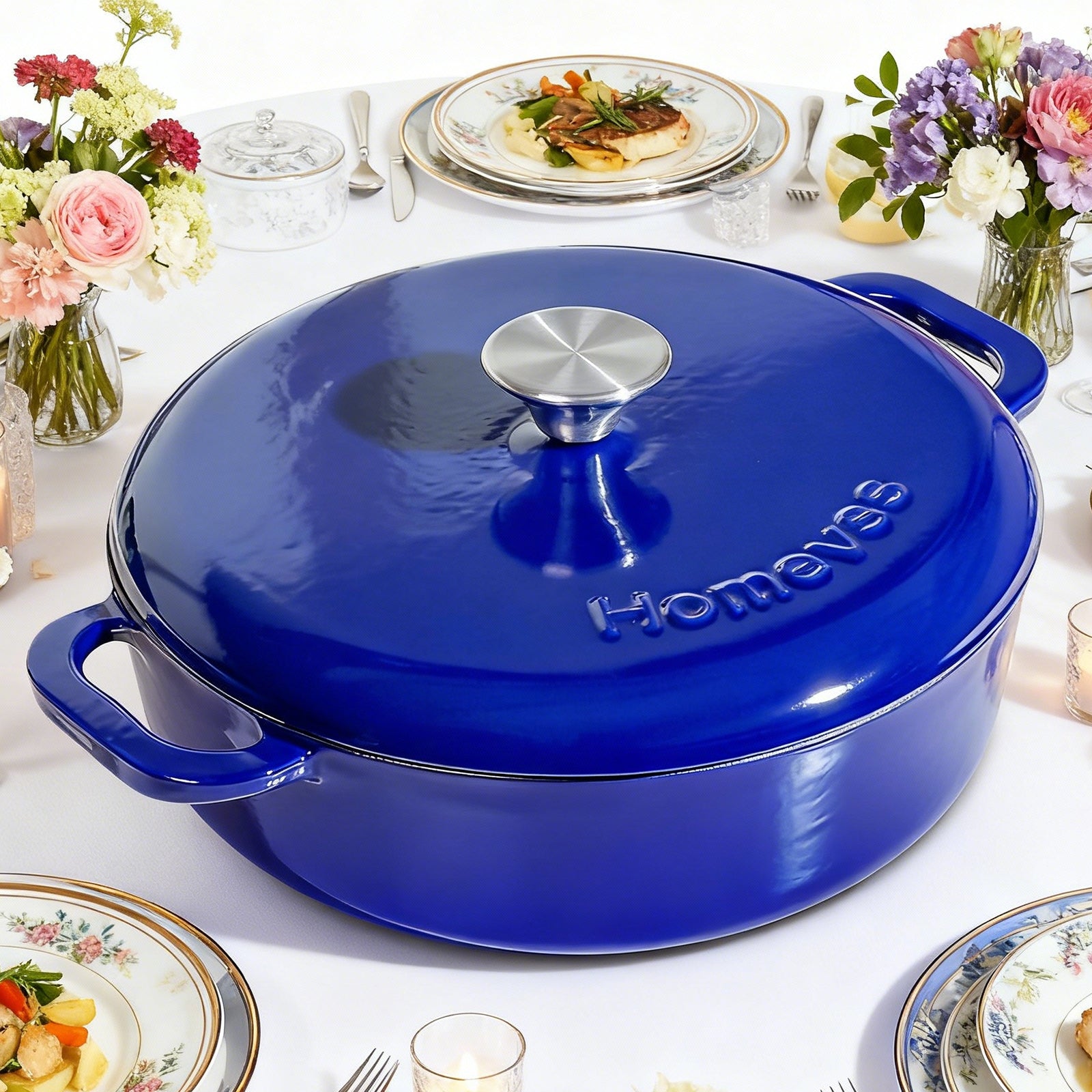
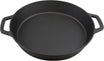
Cast iron is a natural partner for induction. Its magnetic body heats reliably and holds heat exceptionally well, making it especially satisfying for browned chicken, crisp vegetables, cornbread, and slow-cooked meals. An enameled cast-iron Dutch oven is also a graceful choice for serving braises, soups, and holiday side dishes directly at the table.
The trade-off is weight. A large Dutch oven or skillet can be substantial when full, and rough handling may scratch a glass cooktop. Lift rather than slide it. Enameled surfaces also deserve measured heat: induction is powerful, so medium heat is often enough for the results that once required a higher setting.
Clad stainless steel for daily versatility
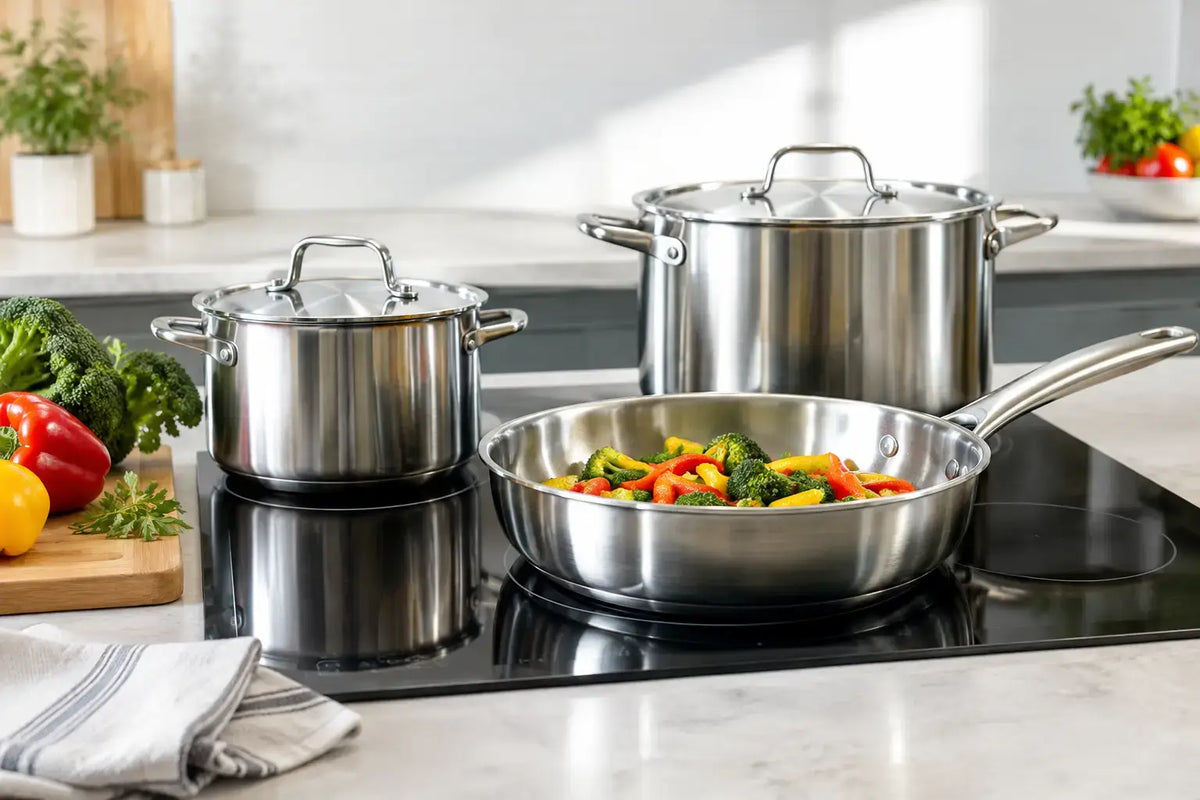
Quality clad stainless steel combines a stainless exterior with heat-conductive layers, often aluminum, inside. For induction, look for a magnetic stainless-steel exterior and a fully bonded construction rather than a thin disk attached only to the base. Fully clad pans tend to distribute heat more evenly up the sides, which is helpful for sauces, grains, and one-pan dinners.
Stainless steel is lighter than cast iron, durable enough for regular use, and polished enough to move from a busy weeknight meal to a dinner party. It does ask for a little technique. Preheat gradually, then add oil before delicate food. This helps reduce sticking without relying on excessive heat.
Nonstick and ceramic-coated options for quick meals
Induction-compatible nonstick cookware can be practical for eggs, pancakes, and other foods that benefit from an easy release. Choose a well-made pan with a flat magnetic base, and use lower to medium settings. High heat can shorten the life of any nonstick surface, while induction reaches cooking temperature quickly.
Ceramic-coated cookware has a clean, modern look, but its performance varies by construction and care. Confirm that it is specifically rated for induction and avoid judging it solely by color or a broad “works on all cooktops” claim. A sturdy base and clear care instructions matter more over time.
Look closely at the bottom of the pan
On induction, the base is the working surface. It should be flat, stable, and broad enough to make solid contact with the cooktop. A warped pan may wobble, create uneven heating, or cause the range to cycle on and off.
Pay attention to the relationship between the pan and the induction zone. A very small butter warmer may not activate a large burner, while a wide skillet placed on a small zone can leave its outer edge less effective. Many modern cooktops include pan-size sensors, but those sensors still have limits. Matching the pan diameter to the marked zone helps deliver more consistent results.
A heavier base is often beneficial, especially in stainless steel, because it resists warping and moderates induction’s fast response. That does not mean every pan needs to be heavy. The goal is balanced construction: substantial enough to stay flat, comfortable enough to lift and pour from without hesitation.
Choose shapes that reflect how you cook
A thoughtful cookware collection is more useful than a crowded cabinet. Start with the meals you make most often and select shapes that support them.
For many homes, a 10- or 12-inch skillet covers everyday sautéing and searing, while a medium saucepan handles oatmeal, rice, reheated soup, and sauces. A deeper sauté pan is valuable when you want the surface area of a skillet with room for pasta, vegetables, or braising liquid. Add a Dutch oven if your kitchen sees chili, no-knead bread, roasts, or meals made for sharing.
Lids deserve attention, too. A close-fitting lid makes it easier to simmer efficiently and retain moisture. Oven-safe handles expand what a piece can do, allowing you to start a dish on the cooktop and finish it in the oven. If you cook for a family or host regularly, generous helper handles can make a full pot feel far more secure to carry.
Consider the cooktop and the table together
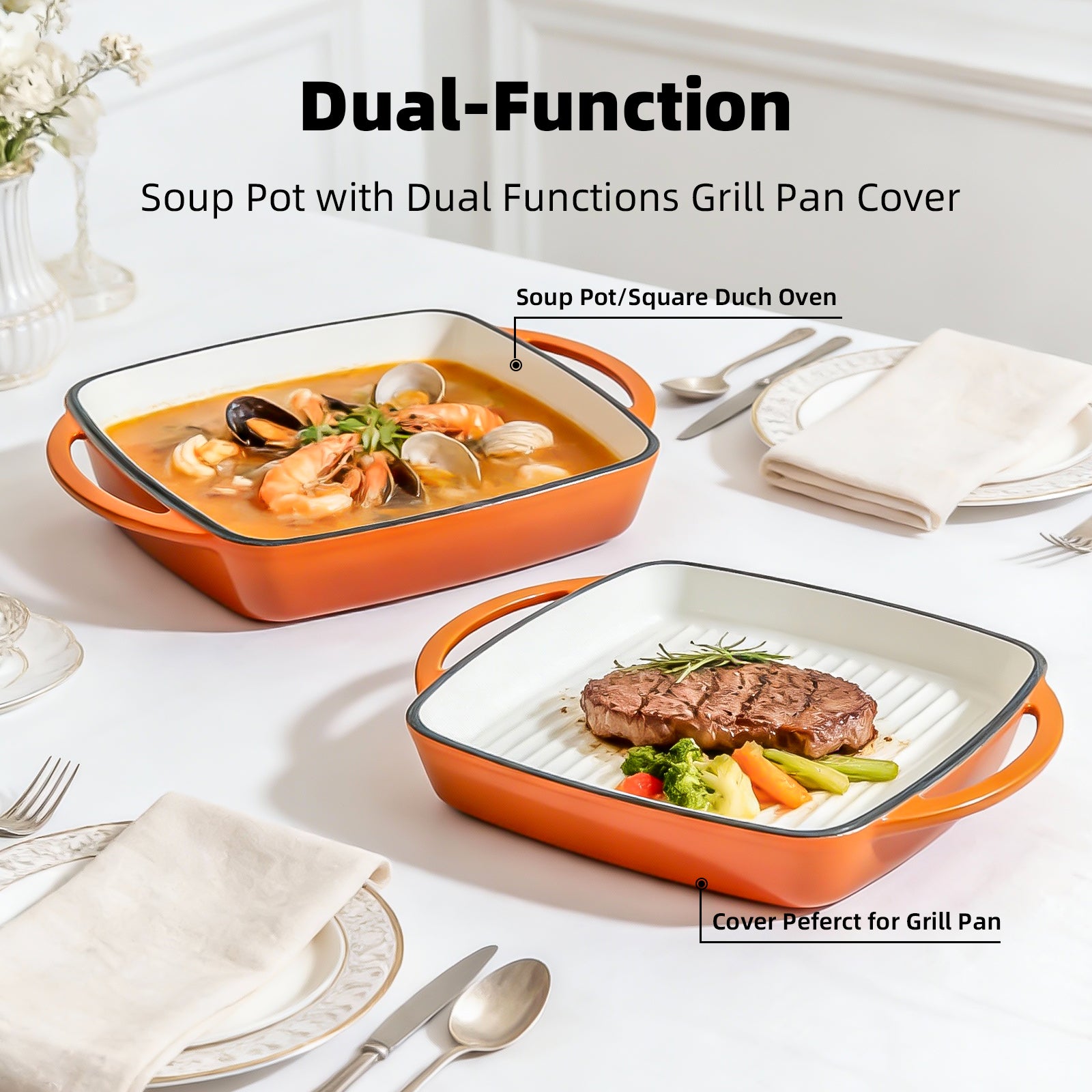
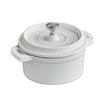
Cookware no longer needs to disappear the moment dinner is ready. A well-proportioned enameled Dutch oven, a handsome cast-iron mini casserole, or a clean-lined stainless pan can make serving feel more relaxed and intentional. That is especially meaningful when the meal is simple. A weeknight baked pasta feels more inviting when it arrives in a vessel designed to be seen.
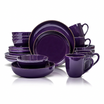
This is also where color and finish become practical choices. Enameled cast iron offers a polished presence and is easy to coordinate with stoneware, dinner plates, and serving bowls. Bare cast iron carries a more traditional look and develops a seasoned patina over time. Neither is inherently better. Choose the finish you will be happy to care for and place on the table.
If you use cookware as serveware, protect surfaces with a trivet and remember that handles stay hot. The same attention to material safety that guides dinnerware should guide cookware: select pieces from brands that clearly communicate their materials, care guidance, and food-contact standards. Health and safety are non-negotiable in a kitchen built for everyday use.
Use induction’s speed with a lighter hand
The most common adjustment for new induction cooks is using too much heat. Because the pan heats so quickly, a setting that felt ordinary on an electric coil or gas range can be unnecessarily aggressive on induction. Begin at medium, give the pan a moment to warm, and increase only as needed.
Avoid preheating an empty nonstick pan for long periods. With cast iron and stainless steel, gradual preheating supports more even performance and helps prevent food from scorching before the center is ready. Once you learn your cooktop’s rhythm, you may find that lower settings become your default.
Cleaning is straightforward but should be gentle. Let cookware cool before washing, especially enameled cast iron, to avoid thermal shock. Keep the exterior base clean so it makes reliable contact with the cooktop, and wipe the glass surface after it has cooled. For heavier cast-iron pieces, lifting instead of dragging protects both the pan and the range.
A considered collection lasts longer
Choosing induction cookware is ultimately about building a kitchen that works beautifully on ordinary nights and feels ready when guests arrive. Begin with compatible, flat-bottomed essentials in materials that match your habits, then add specialized pieces only when your cooking calls for them.
A durable cast-iron skillet, a versatile stainless-steel saucepan, and an enameled Dutch oven can cover an extraordinary range of meals without overfilling your cabinets. Choose pieces you enjoy using, caring for, and serving from, and your induction cooktop will become less of a new appliance and more of an easy part of home.



Leave a comment
This site is protected by hCaptcha and the hCaptcha Privacy Policy and Terms of Service apply.