



A weeknight dishwasher load should make life easier, not leave you wondering whether your favorite dinner plates will come out chipped, cloudy, or cracked. So, is stoneware dishwasher safe? Often, yes - but the most reliable answer depends on how the piece was made, glazed, and finished.
Well-made, fully glazed stoneware is designed for the rhythm of everyday meals: breakfast bowls, family dinners, coffee breaks, and the occasional table set for guests. Still, “stoneware” describes a broad category, not one universal standard. A high-fired plate from a quality dinnerware collection deserves different expectations than a hand-finished vintage piece or an unglazed ceramic serving bowl.
Is Stoneware Dishwasher Safe for Everyday Use?
Most modern stoneware labeled dishwasher safe can be washed in a household dishwasher without a problem. High-fired stoneware is dense and durable, and a properly fused glaze creates a smooth, nonporous surface that is easier to clean after sauces, oils, and everyday food residue.
The dishwasher-safe marking is the deciding factor. Check the underside of the piece, its packaging, or the maker’s care instructions before loading it. If the manufacturer says it is dishwasher safe, use the dishwasher with reasonable care. If there is no marking, especially on handmade, older, decorative, or souvenir pieces, hand washing is the safer choice.
A dishwasher-safe label does not mean a dish is indestructible. Stoneware can still chip when it knocks against another item, and any ceramic can be stressed by sudden shifts between very hot and very cold temperatures. The goal is not to treat your dinnerware as fragile. It is to give thoughtfully made pieces the same thoughtful handling you would give any favorite part of your home.
Why Some Stoneware Handles the Dishwasher Better
Stoneware is fired at high temperatures, creating a sturdy clay body with less porosity than lower-fired earthenware. In quality production, firing also helps the glaze bond securely to the surface. That combination supports daily use and makes cleanup refreshingly simple.
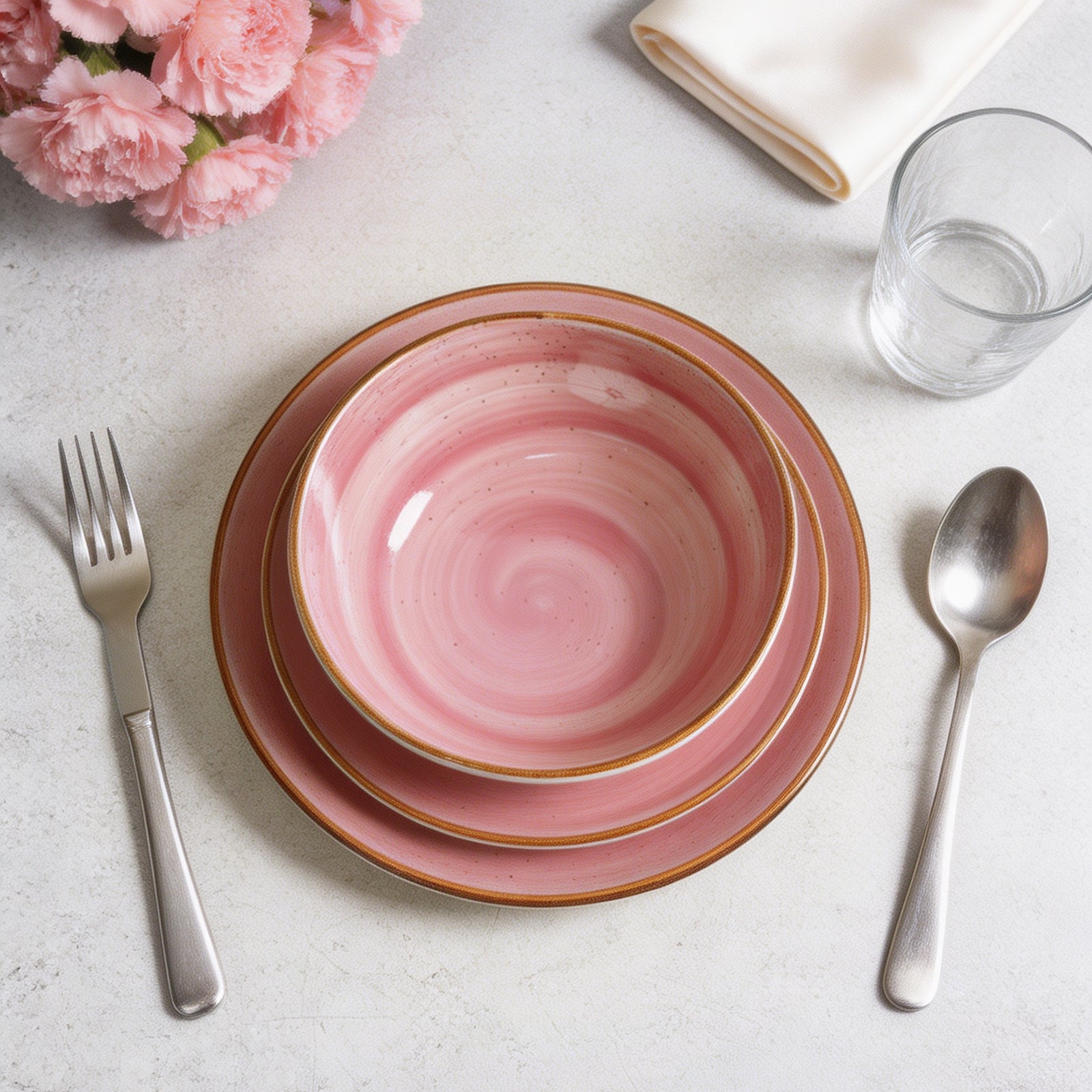
The glaze matters just as much as the clay. A complete, durable glaze protects the surface and helps prevent food and moisture from settling into tiny pores. Reactive glazes add another consideration: their layered colors and flowing variations make every piece feel one of a kind, but they should still be applied and fired to withstand normal household use.
At HomeVss, high-fired ceramic pieces are made at temperatures up to 1200°C and held to 100% lead- and cadmium-free standards. Those details are not simply technical language. They support the qualities people want from everyday dinnerware: a beautiful finish, dependable strength, and confidence around the family table.
When You Should Hand Wash Stoneware Instead
Some stoneware is better kept out of the dishwasher, even if it looks sturdy. Hand washing is the cautious choice for pieces with metallic rims or decals, hand-painted details without clear care guidance, visible crackling in the glaze, or sentimental value that cannot be replaced.
Unglazed stoneware also deserves closer attention. Its natural matte surface can be more absorbent and may hold onto moisture, oils, or dishwasher detergent residue. Some unglazed pieces are specifically made for dishwasher use, but the maker’s instructions should lead the decision.
Be especially careful with older stoneware. Vintage ceramics may have glazes, finishes, or decorative applications that were not intended for modern dishwasher detergents and high-heat drying cycles. Even when a treasured inherited platter seems perfectly intact, preserving it for serving rather than repeated machine washing is often the wiser trade-off.
How to Load Stoneware Without Chips or Scratches
Most dishwasher damage happens through contact, not water. A plate that is secure through the wash is far less likely to come out with a nicked rim than one that shifts and taps against a mug or pan.
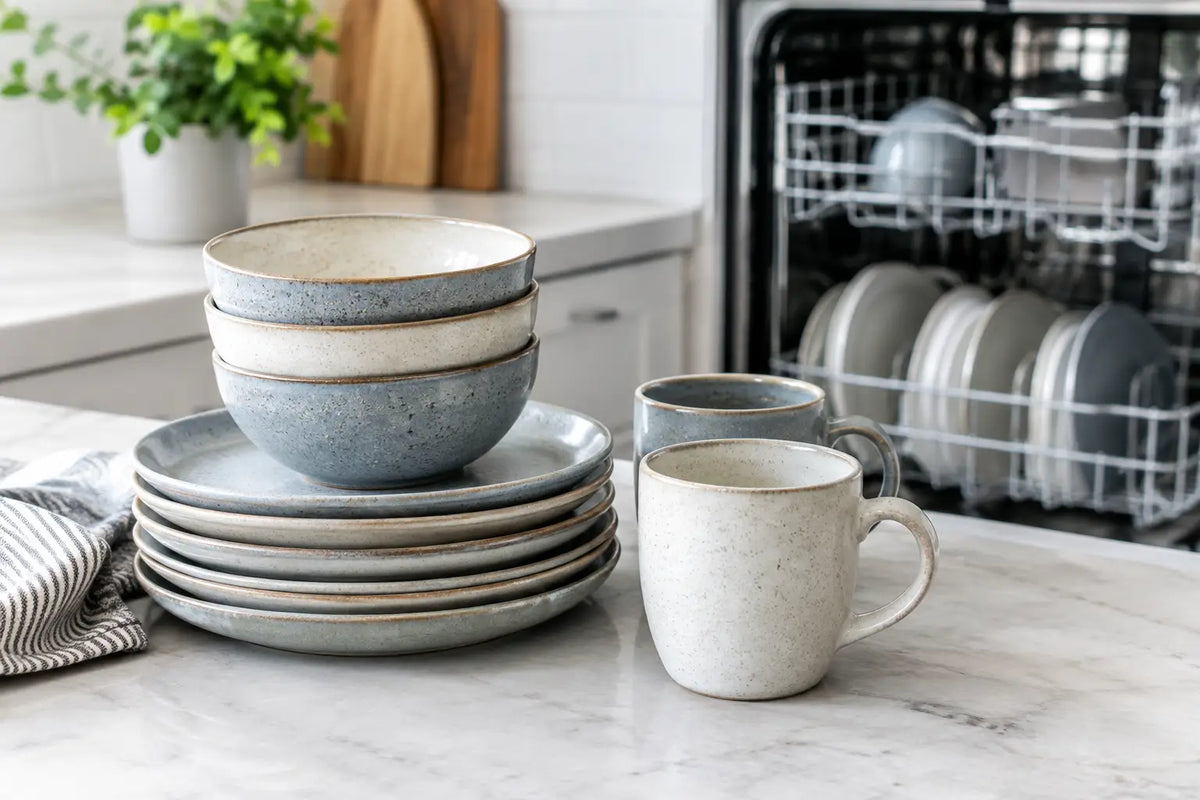
Place plates and bowls in the rack slots with a little room between them. Do not stack stoneware tightly or lean it against cookware, knives, or heavy serving pieces. Mugs should sit securely with handles positioned so they will not catch on another item as the rack moves.
Use a normal or gentle cycle when possible, along with a mild detergent. Extremely aggressive detergents and prolonged high heat can gradually dull some glazes over many years, particularly on pieces with a satin or artisan-style finish. A heated dry setting is usually fine for marked dishwasher-safe stoneware, though air drying can be a gentler option if you prefer it.
Avoid placing hot stoneware directly onto a cold, wet countertop after the cycle ends. Let it cool gradually in the dishwasher or place it on a dry towel. This small habit reduces the risk of thermal shock, which can happen when ceramic changes temperature too quickly.
Dishwasher Safety and Microwave Safety Are Different
It is easy to assume that dishwasher-safe stoneware is automatically microwave safe. Sometimes it is, but these are separate care claims. Dishwasher safety refers to exposure to water, detergent, and machine heat. Microwave safety concerns how the clay body, glaze, and any decoration respond to microwave energy.
Always look for each designation independently. Stoneware with metallic accents should not go in the microwave, even if it can be hand washed or placed in a dishwasher under limited conditions. Likewise, a dish that is microwave safe should not be moved from the refrigerator straight into a hot oven unless it is explicitly labeled oven safe.
This is where a quick check of the product care instructions pays off. Clear guidance lets you enjoy a piece for weekday leftovers, holiday serving, or a leisurely brunch without guessing where its limits are.
Signs It Is Time to Retire a Piece From Daily Use
A small surface mark is not always a concern. Flatware can leave gray marks on light-colored glazes, and those are often metal transfer marks rather than scratches or cracks. Gentle cleaning can usually improve their appearance.
A true crack is different. If you see a line that catches your fingernail, hear a dull change in sound when tapping the piece lightly, or notice moisture seeping through the base after washing, stop using it for food. Cracks can expand with heat and dishwasher cycles, and damaged glaze is difficult to clean thoroughly.
Crazing - a web of fine lines in the glaze - is another reason to pause and assess. Some decorative ceramics are intentionally crazed, but newly developed crazing on a daily-use plate may signal that the glaze and clay body are no longer moving together as they should. When in doubt, reserve the piece for display or replace it with dinnerware intended for regular use.
A Simple Care Routine for Beautiful Stoneware
The best stoneware care routine is uncomplicated: choose pieces clearly marked dishwasher safe, load them with space, avoid sudden temperature changes, and inspect them occasionally for chips or cracks. For stubborn baked-on food, soak the dish first instead of using harsh abrasives that can wear at the finish.
A well-set table should feel lived in, not overly precious. Choose stoneware made for the way you actually eat, then give it the few sensible precautions that help its color, glaze, and character stay part of your home for years to come.



Leave a comment
This site is protected by hCaptcha and the hCaptcha Privacy Policy and Terms of Service apply.