

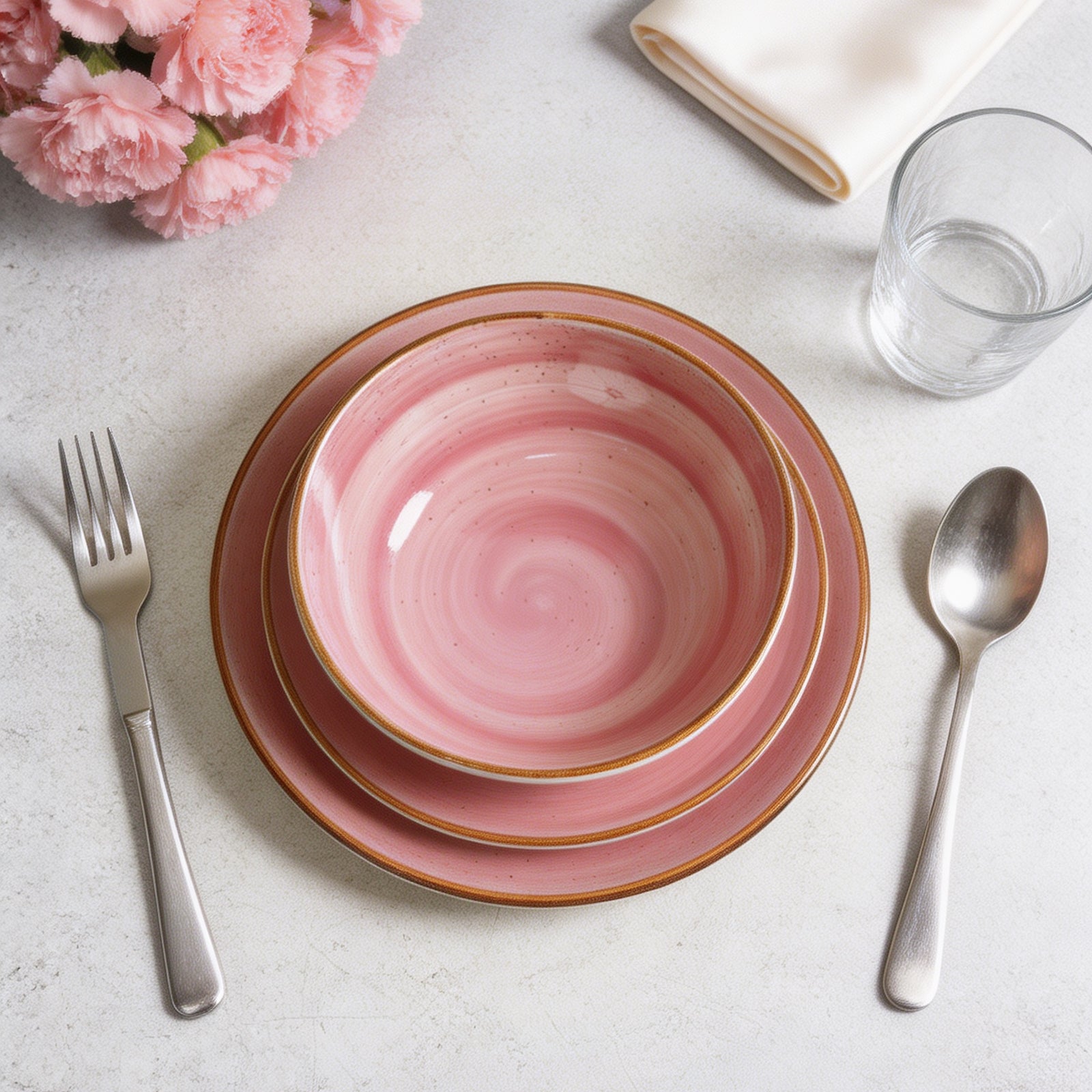
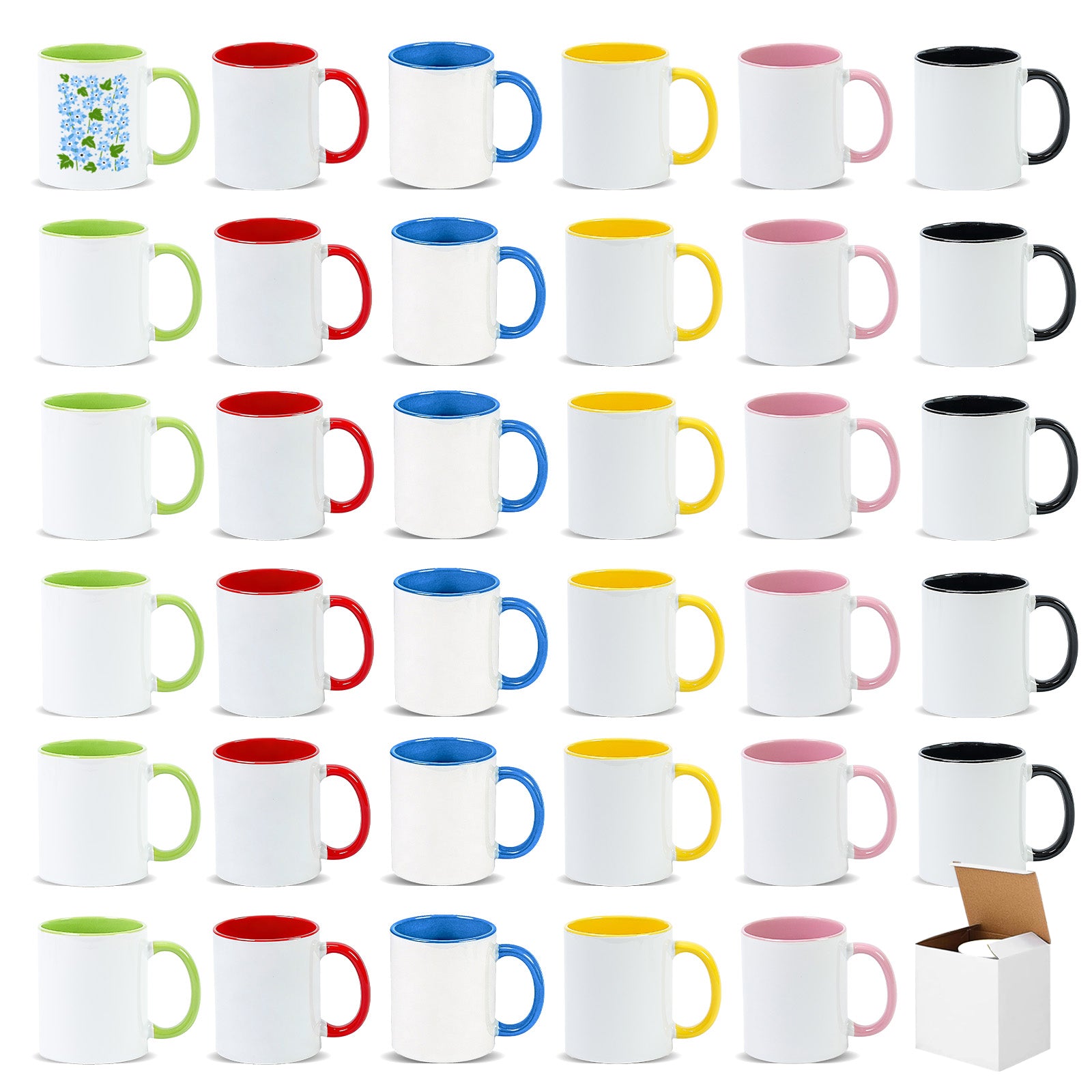
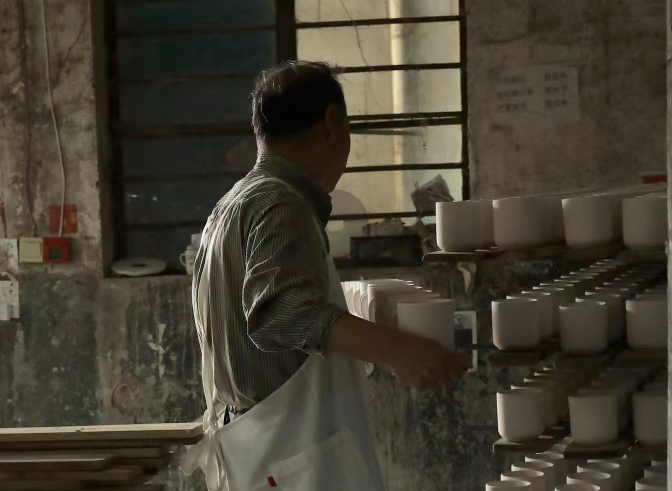
A dinner plate has a quiet job: it needs to look right beneath a birthday cake, hold up to a busy Tuesday pasta night, and still feel special when friends come over. In the choice between stoneware vs bone china, the better material is not automatically the more formal or the more familiar one. It is the one that suits how you actually eat, host, clean up, and live.
Stoneware brings warmth, weight, and handcrafted character to the table. Bone china offers a finer profile, luminous finish, and surprising strength. Both can be beautiful everyday choices when they are well made, properly cared for, and finished with food-safe glazes.
Stoneware vs Bone China: The Essential Difference
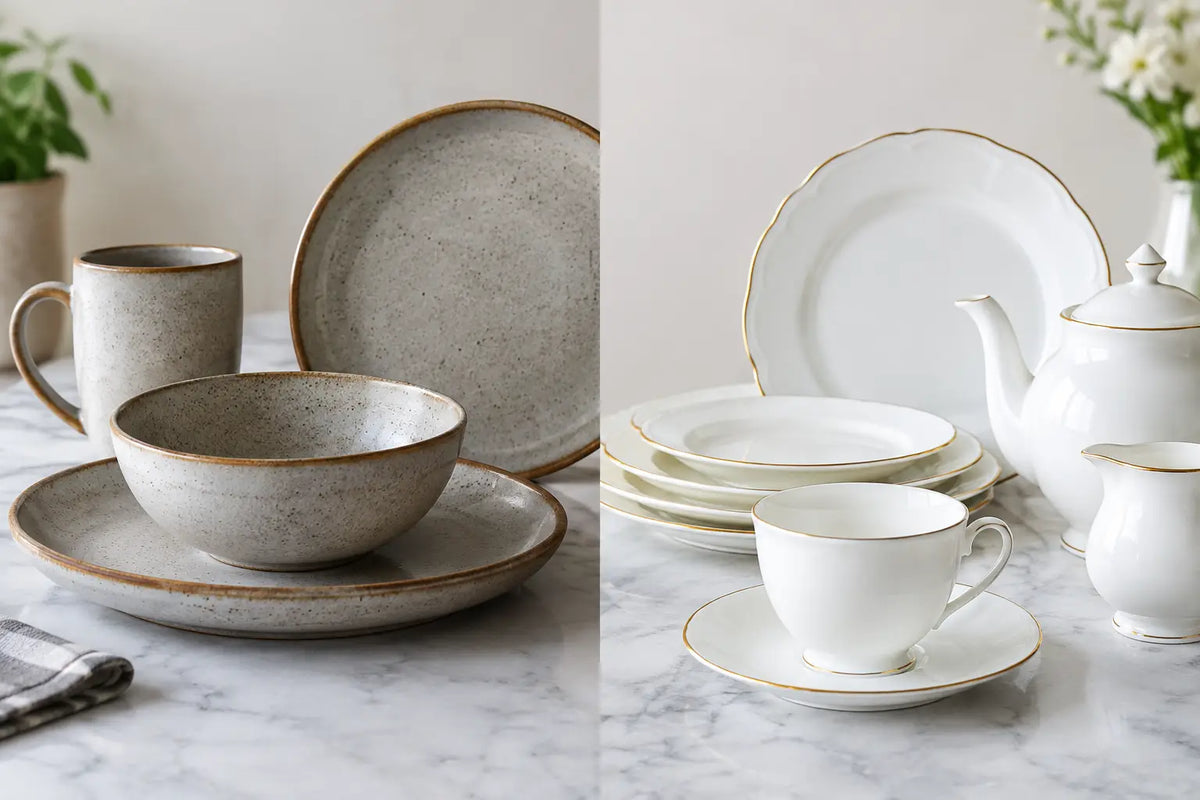
Stoneware is a clay-based ceramic fired at high temperatures until it becomes dense, durable, and nonporous or nearly nonporous. Its natural heft and substantial feel make it especially appealing for relaxed, gathered tables. It is often finished with a glossy, satin, or reactive glaze that gives each piece subtle variation in color and movement.
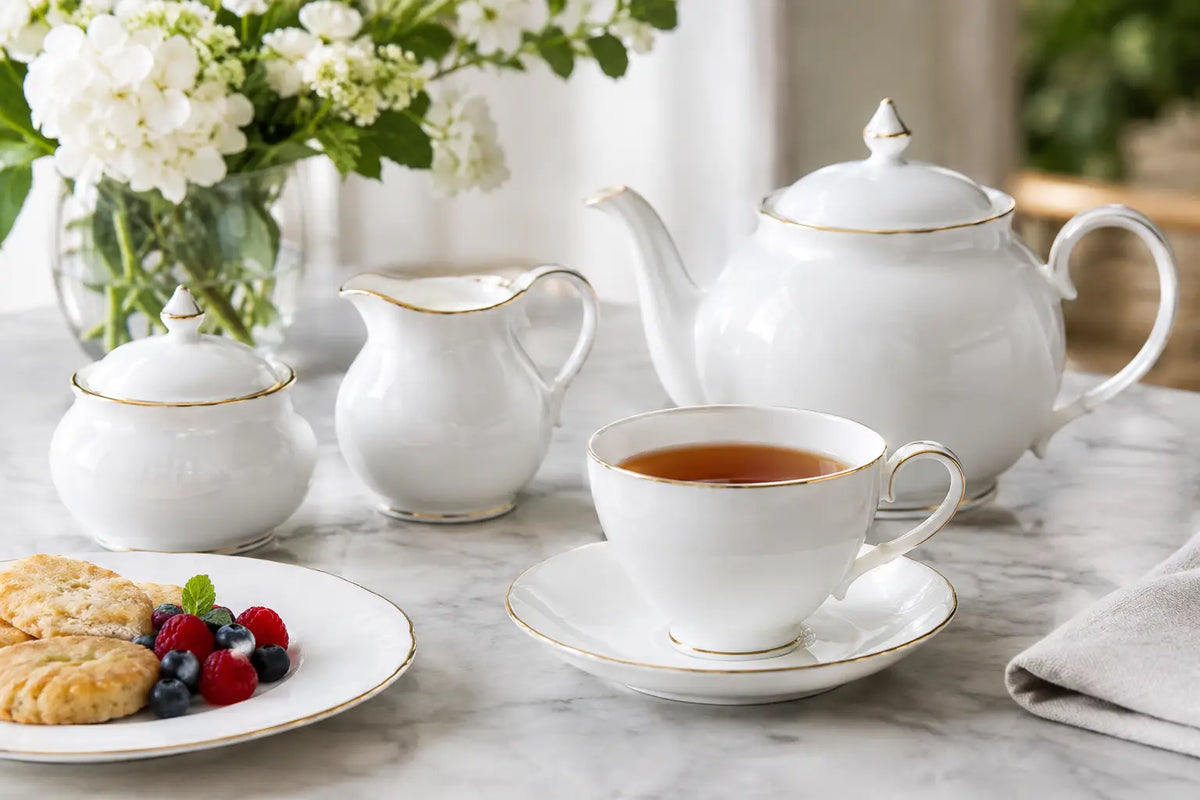
Bone china is a refined type of porcelain that traditionally contains bone ash alongside clay and other mineral materials. This composition creates its signature creamy white color, delicate translucency, and light feel. Hold a fine bone china plate near a bright window and you may see a soft glow around the thinner edges - a detail stoneware does not typically share.
The distinction is not simply casual versus formal. A well-designed stoneware collection can look polished enough for an anniversary dinner, while bone china can make a weekday breakfast feel considered rather than ceremonial. The decision comes down to the experience you want from your tableware.
Why Stoneware Feels So At Home Every Day
Stoneware is made for people who want their table to feel inviting, tactile, and lived in. It has a reassuring presence in the hand, whether you are passing a serving bowl around the table or settling in with a large mug of coffee. The material usually has thicker walls than bone china, which creates a more grounded, artisanal silhouette.
Its visual range is part of the appeal. Matte neutrals feel calm and architectural; glossy glazes add depth; and reactive finishes create variations that make a set feel collected rather than factory-flat. Because the glaze responds differently during firing, no two reactive-glaze pieces are exactly alike. That individuality is a feature, not a flaw.
High-fired stoneware is also a practical choice for regular meals. Quality pieces are designed to resist everyday wear and are often suitable for the dishwasher and microwave. At HomeVss, high-fired ceramics are produced at temperatures up to 1200°C, helping create dinnerware with the density and durability families expect from pieces used again and again.
Still, stoneware is not indestructible. A hard knock against a granite counter, a chip caused by stacked plates scraping together, or a sudden temperature change can damage any ceramic. Avoid moving a cold dish directly into a very hot oven or pouring boiling liquid into a chilled mug. Let stoneware warm and cool gradually whenever possible.
What Makes Bone China Feel So Special
Bone china earns its reputation through refinement, not fragility. It is generally lighter and thinner than stoneware, yet quality bone china can be remarkably strong for its profile. That balance gives it a distinctive kind of luxury: a plate that feels graceful in the hand without requiring you to treat every meal as a formal occasion.
The smooth surface and pale, luminous body also make food look especially elegant. Colorful salads, golden pastries, and richly sauced dishes stand out against a clean bone china backdrop. For a wedding registry, a meaningful housewarming gift, or a first set of grown-up dinnerware, that versatility has lasting appeal.
Bone china is particularly well suited to tables where a lighter place setting matters. If you enjoy layering chargers, salad plates, cloth napkins, and serving pieces, its slimmer form keeps the overall setting from feeling heavy. It also stores efficiently in many cabinets because the pieces are often less bulky than stoneware.
Care instructions vary by collection. Many modern bone china pieces are dishwasher-safe and microwave-safe, but metallic rims, hand-painted details, or specialty decals can change that. Always follow the care guidance for the specific piece. If a set includes gold or platinum accents, hand washing is usually the wiser choice, and it should not go in the microwave.
Durability: Weight Is Not the Whole Story
It is easy to assume the heavier plate will always be tougher. In reality, durability depends on the clay body, firing process, glaze quality, shape, and thickness at vulnerable areas such as rims and handles. A thoughtfully made bone china cup may outperform a poorly made stoneware mug, while high-fired stoneware can be an excellent choice for homes that want a sturdier, more substantial feel.
Stoneware tends to feel more forgiving in busy kitchens because of its weight and thicker construction. It is a natural fit for family dinners, casual entertaining, and tables that see frequent use. Bone china is also suitable for everyday dining, especially when you prefer lighter dishes and are comfortable handling thinner edges with a little more care.
Neither material should be treated as a substitute for cookware unless the manufacturer specifically says it is oven-safe. Dinnerware can crack under thermal shock, which happens when its temperature changes too quickly. The safest habit is simple: do not take refrigerated ceramic straight into a hot oven, and do not place hot pieces on a cold or wet surface.
Style, Color, and the Mood of Your Table
Choose stoneware when you want texture and personality to lead. It pairs naturally with linen napkins, wood serving boards, seasonal centerpieces, and relaxed shared meals. Speckled glazes, earthy colors, sculpted rims, and reactive finishes bring visual interest even when the meal is uncomplicated.
Choose bone china when you prefer clean lines, a polished white setting, or a lighter layer of elegance. It works beautifully with classic entertaining pieces, crystal glassware, silver-toned flatware, and fresh flowers. That does not mean it has to look traditional. Contemporary bone china can be minimal, modern, and quietly expressive.
Your existing table setting can help make the choice clearer. If your kitchen is full of warm woods, handmade textiles, and soft neutral tones, stoneware may feel like the natural continuation of your home. If you lean toward crisp linens, tailored details, and airy spaces, bone china may give you the finish you are looking for.
Safety and Care Matter More Than the Label
Whether you select stoneware or bone china, ask how it is made and finished. The glaze is the surface your food and drink touch, so material safety should never be an afterthought. Look for clear assurances that dinnerware is lead- and cadmium-free. Health and safety are non-negotiable, particularly for plates, bowls, and mugs used by the whole family.
A smooth, well-fired glaze also helps simplify cleanup. Use a nonabrasive sponge for routine washing, and avoid harsh scouring pads that can dull decorative surfaces over time. When stacking plates, consider felt protectors or a soft liner if you want to reduce rim-to-rim contact in a crowded cabinet.
For online purchases, practical support matters, too. Ceramic dinnerware travels through a lot before it reaches your table. Secure packaging and a clear breakage-replacement policy remove much of the stress from choosing something beautiful and breakable from home.
Which One Should You Choose?
For a first everyday set, stoneware is often the easy answer if you want a durable, expressive look that can move from breakfast to dinner guests without changing the table. It gives everyday dining a little more texture and warmth, especially in homes where meals are shared often and casually.
Bone china is the better fit if you value a lighter hand feel, timeless white surfaces, and a more refined presentation. It is an especially thoughtful choice for registries, gifts, and anyone building a table that can shift easily from weekday soup to holiday place settings.
There is also no rule saying you must choose only one. Stoneware dinner plates and bowls can create a welcoming everyday foundation, while bone china appetizer plates, teacups, or serving pieces add a graceful layer for celebrations. The most inviting tables are rarely the most rigid ones. Choose the pieces you will reach for often, enjoy caring for, and be happy to set down when the people you love gather around.


Leave a comment
This site is protected by hCaptcha and the hCaptcha Privacy Policy and Terms of Service apply.