

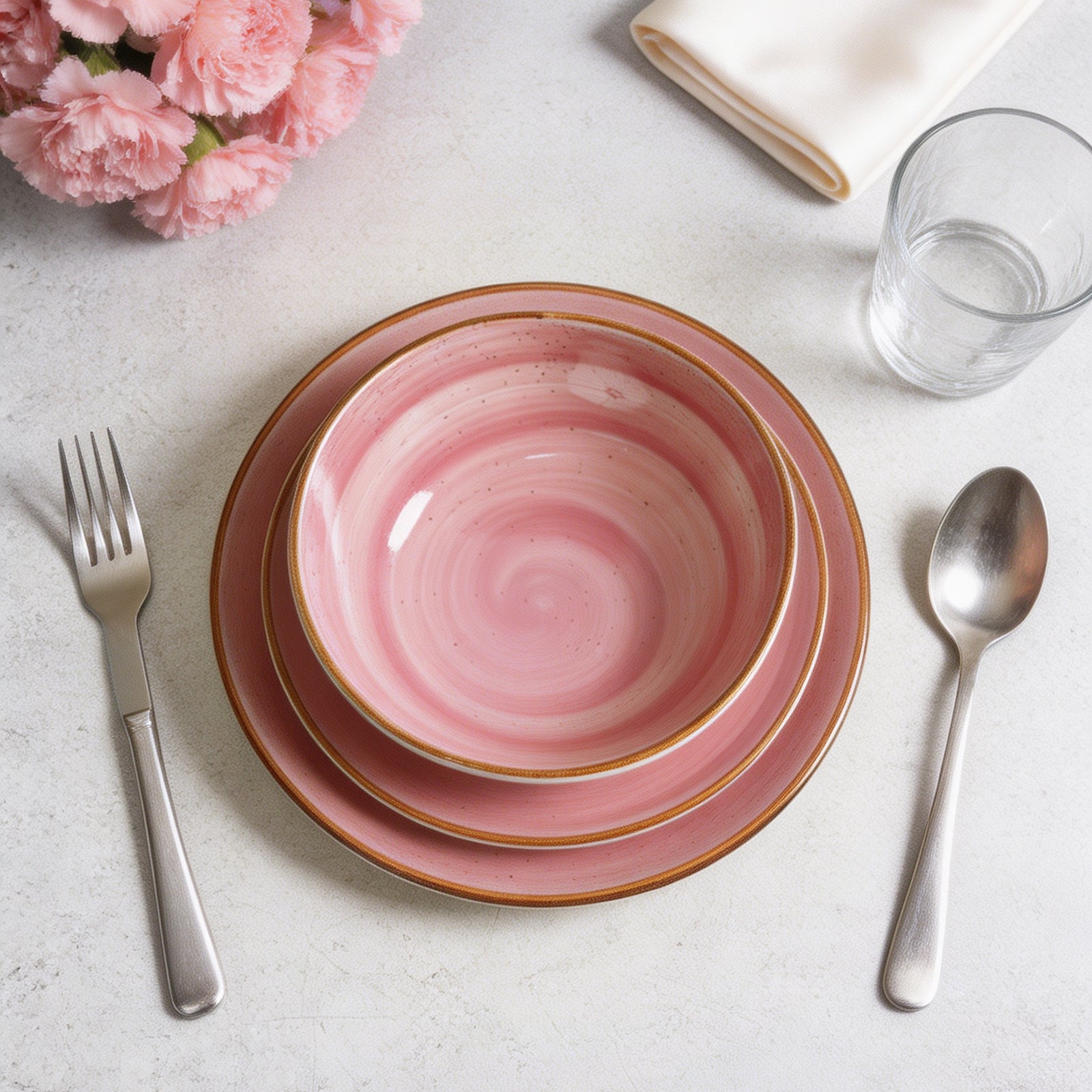

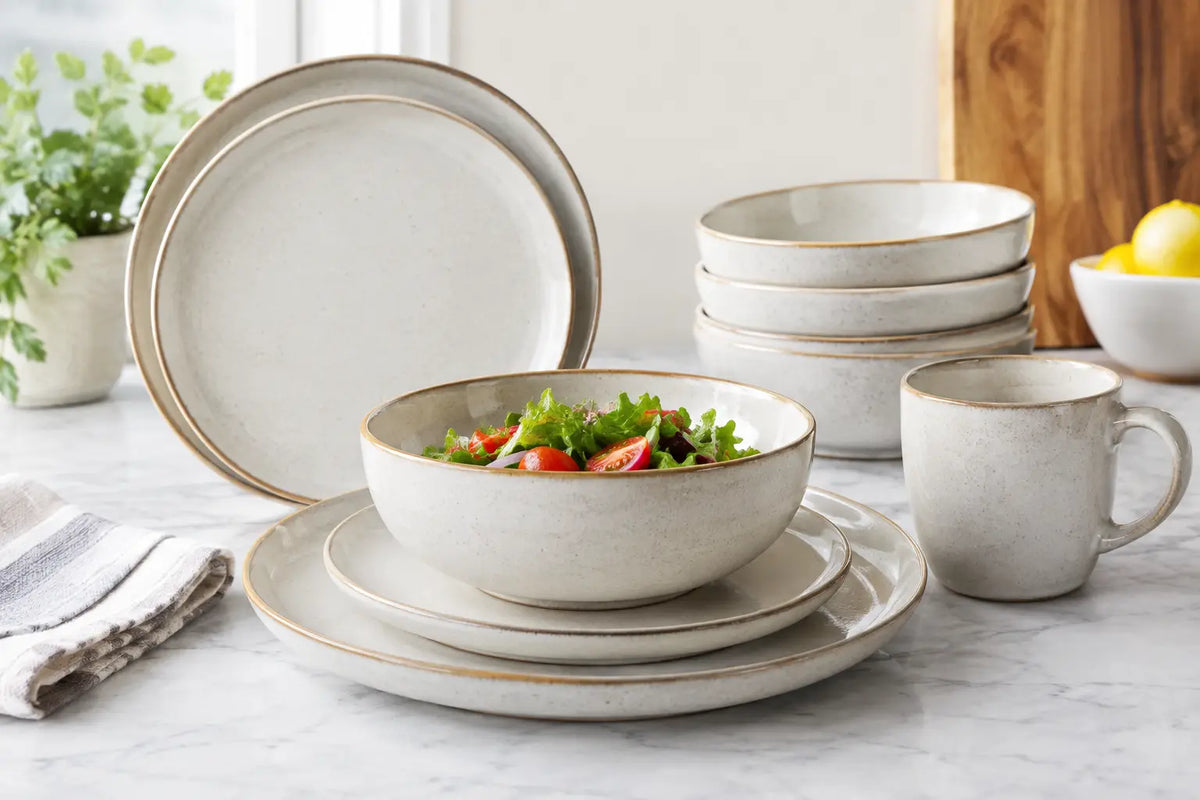
A dinner plate is one of the most-used pieces in a home, yet its safety is easy to overlook until you are shopping for a new set. Cadmium free ceramic dishes offer reassurance for the meals that happen every day: weekday breakfasts, packed leftovers, birthday cake, and the dinner you set out for people you love. The right choice should feel as good in your hands as it looks on the table - thoughtfully made, dependable, and suited to real life.
For style-conscious households, safety does not have to mean settling for plain dinnerware. High-quality ceramics can bring depth of color, artisan character, and a polished sense of occasion to a table while meeting clear material safety standards.
What cadmium free ceramic dishes actually mean
Cadmium is a naturally occurring metal that has historically been used in certain ceramic pigments and decorative finishes, particularly to create vivid reds, oranges, and yellows. The concern is not simply whether cadmium was involved somewhere in a manufacturing process. It is whether cadmium can migrate from the finished surface into food or drink.
When a maker describes dinnerware as cadmium-free, the most useful interpretation is that the finished product is made without cadmium in the food-contact glaze or decoration, and that its safety claim is backed by appropriate testing and quality controls. A responsible brand should be able to state its standard clearly rather than relying on vague phrases such as “non-toxic” or “eco-friendly.”
There is a meaningful distinction between cadmium-free and dinnerware that merely meets allowable leach limits. Both terms may appear in the market, but they are not identical claims. If your priority is avoiding cadmium altogether, look for an explicit cadmium-free statement from the manufacturer. For a family’s everyday table, clarity is part of quality.
Why glaze quality matters as much as the clay
Ceramic dinnerware begins with a clay body, but the final surface is shaped by its glaze, firing process, and decoration. A glaze forms the smooth, glass-like finish that gives a plate its color, shine, or matte texture. It also creates the barrier between food and the ceramic body.
A well-formulated glaze, fired correctly, should be stable through ordinary use. High firing temperatures help ceramic and glaze mature together, contributing to strength, a more durable finish, and consistent color. At HomeVss, high-fired ceramics are produced at temperatures up to 1200°C, with 100% lead- and cadmium-free standards treated as non-negotiable.
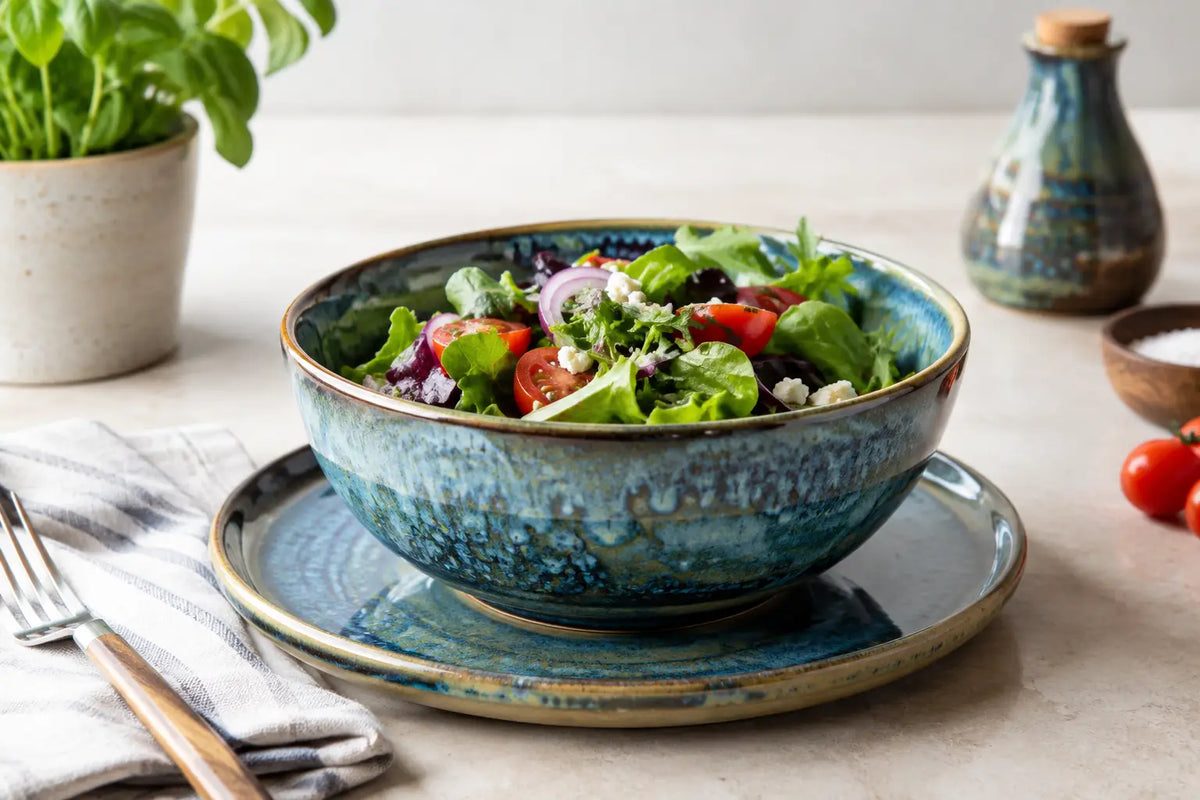
Reactive glazes deserve a little context here. Their soft variations in tone are created by the way minerals and heat interact in the kiln, so no two pieces look exactly alike. That variation is a design feature, not a sign of inconsistency. What matters is that the finished glaze is properly fired, smooth where it needs to be, and covered by the maker’s stated food-safety standards.
How to shop with confidence
Start with the product description, not just the color or photography. A trustworthy listing should identify the material, such as stoneware or bone china, and state whether it is lead- and cadmium-free. If the claim is absent, ask before buying, especially for serving pieces or mugs that will be used frequently.
It also helps to consider where decoration sits. A pattern sealed beneath a durable glaze or applied to a non-food-contact area may be a different construction from a hand-painted rim or a bright exterior finish. This does not automatically make one option unsafe, but it is a reason to favor transparent product information and tested finishes.
Be cautious with vintage, secondhand, or unmarked ceramic dishes when you cannot confirm their origin or composition. Older decorative ware, souvenir pieces, and imported items without clear documentation can be beautiful, but they are better reserved for display if there is any uncertainty. A modern, clearly labeled dinner set is usually the simpler choice for serving hot, acidic, or everyday foods.
Stoneware or bone china for daily meals?
Both materials can make excellent cadmium free ceramic dishes, but they create different experiences at the table. Stoneware has a substantial, grounded feel. It suits relaxed family meals, layered tablescapes, and hosts who want dinnerware with visual warmth. Its slightly heavier weight can be especially appealing for cereal bowls, pasta bowls, and generous mugs.
Fine bone china is typically lighter, thinner, and more refined in profile. It brings an elegant lift to a place setting without needing to be saved for holidays. For apartment dwellers with limited cabinet space or couples building a wedding registry, bone china can be a smart choice when they want one set that transitions easily from Tuesday night to a formal celebration.
Material alone does not determine durability or safety. The quality of the clay, glaze, firing, and finishing all matter. A well-made stoneware plate can be a hardworking staple, while carefully crafted bone china can be remarkably resilient. Choose based on the look, weight, and rituals of your home, then confirm the maker’s safety specifications.
Care protects the finish you chose
Even premium dinnerware benefits from sensible care. Avoid exposing a dish to sudden, dramatic temperature changes, such as moving it from a cold refrigerator directly into a very hot oven. Thermal shock can stress ceramic and glaze, increasing the chance of cracking over time.
Use pieces only as their care instructions allow. Dishwasher-safe does not necessarily mean oven-safe, and microwave-safe does not automatically apply to dinnerware with metallic accents. If stacking plates, consider felt protectors or place a soft liner between pieces if you have a tight cabinet and want to preserve glossy or reactive-glaze surfaces.
Retire a piece from food service if you notice extensive cracking, flaking glaze, or damage on a food-contact surface. Small signs of use can add character to handmade-looking ceramics, but a compromised finish is different from a natural glaze variation. Replacing damaged dinnerware is a practical way to keep your collection looking composed and serving well.
Build a table that works harder
A safe everyday set does not need to include every possible piece on day one. Begin with dinner plates, salad plates, cereal bowls, and mugs in quantities that match your household and hosting habits. Add serving bowls or accent plates later when you know how you entertain.
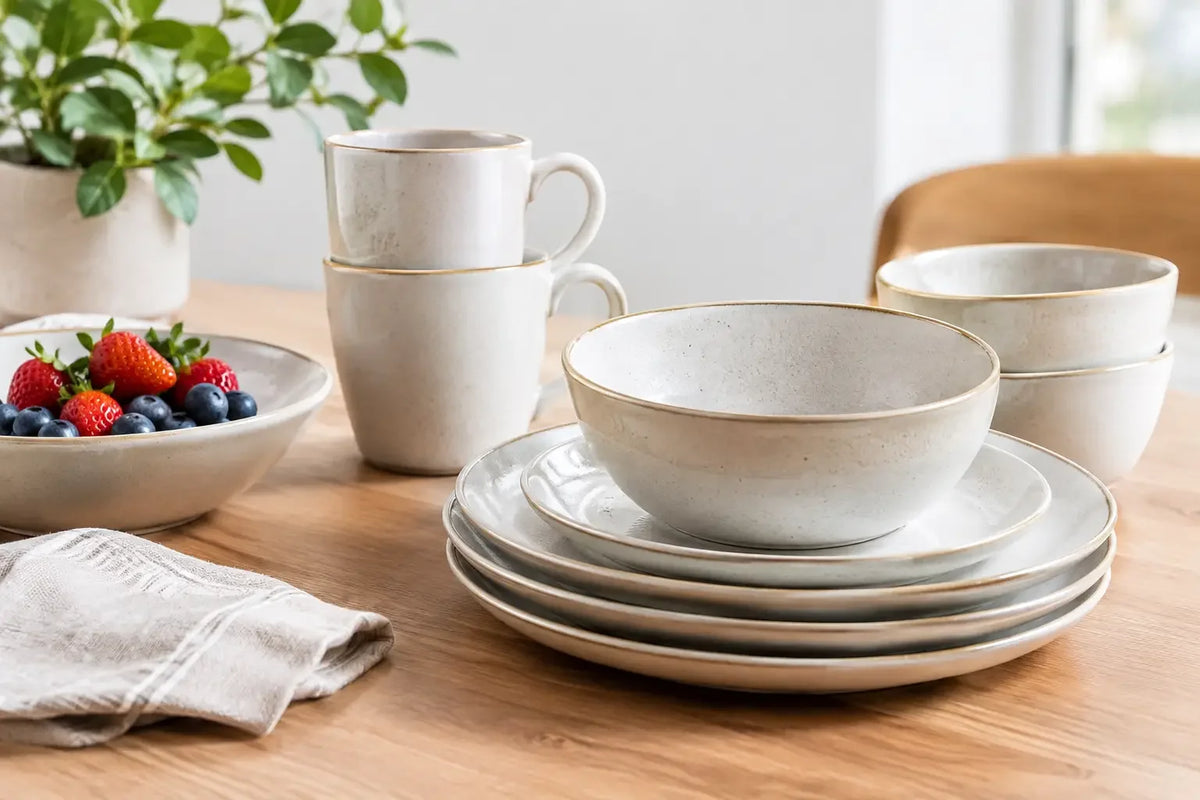
This approach leaves room for personality. A neutral stoneware base can make a vivid serving platter feel intentional, while a reactive-glaze collection can carry a table with little more than linen napkins and fresh fruit. The goal is not a showroom-perfect cabinet. It is a collection you reach for without hesitation because it is beautiful, safe, and ready for another meal.
When selecting cadmium free ceramic dishes, look beyond a single label. Choose a maker that explains its materials plainly, fires its pieces with care, and stands behind the dinnerware after it arrives. That is how everyday dining gains a little more confidence - and a little more beauty.


Leave a comment
This site is protected by hCaptcha and the hCaptcha Privacy Policy and Terms of Service apply.