

Protecting the Heart of Your Kitchen: How to Store Ceramic Dinnerware Safely to Avoid Chipping
You are standing in the kitchen after a long, fulfilling family dinner, unloading the dishwasher while the house finally quiets down. You grab a heavy stack of your favorite rustic farmhouse plates, pull open the overhead cabinet, and slide them onto the shelf. Suddenly, you hear it—that sharp, terrifying clink of ceramic hitting ceramic a little too hard. Your heart skips a beat as you quickly check the edges, praying you haven't ruined the beautiful non-glossy finish you love so much. We have all been there. The anxiety of damaging the plates that anchor your daily meals is incredibly real.
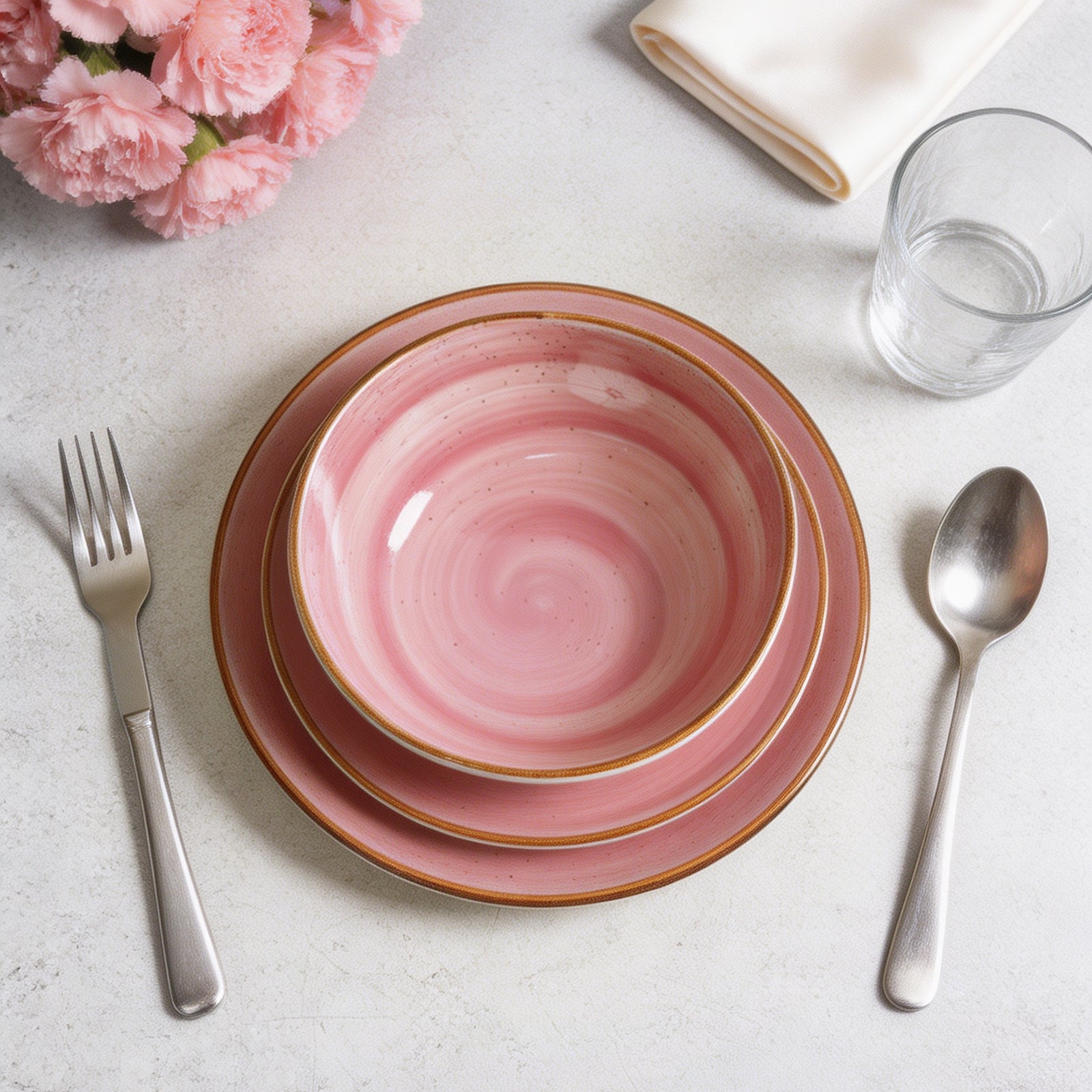
Beautiful, tactile tableware is meant to be used every single day, not hidden away in bubble wrap for a special occasion that never arrives. However, the reality of daily use means these pieces face constant movement, friction, and stacking. If you want to keep your table looking beautiful for years, learning how to store ceramic dinnerware safely to avoid chipping is essential. Let’s walk through some simple, realistic storage habits that will protect your beloved dishes without adding stress to your daily routine.

Mindful storage is the simplest way to honor the tableware that feeds your family.
The Hidden Dangers Inside Your Kitchen Cabinets
To effectively protect your dinnerware, it helps to understand exactly why and how chips happen in the first place. High-quality stoneware and ceramics are remarkably durable against heat and standard utensil use, but they possess a specific vulnerability when it comes to blunt impact. The edges and rims of your plates are the thinnest points, absorbing the majority of the shock when pieces are bumped together in a crowded space.
Understanding the Stress of Friction
Why Weight Distribution Matters
When you build a tall, heavy stack of plates, the pieces at the absolute bottom are bearing a tremendous amount of weight. In this compressed state, simply sliding a plate out from the middle or sliding the entire stack across a wooden shelf creates intense friction. Over time, this friction can wear down beautiful, non-glossy exterior surfaces, leaving micro-scratches that eventually weaken the structural integrity of the rim. A chip rarely happens completely out of nowhere; it is usually the result of weeks or months of high-pressure sliding and minor bumps inside an overcrowded cabinet.
Smart Stacking Strategies for Everyday Use
You do not need to remodel your entire kitchen to create a safer environment for your ceramics. One of the most effective ways to prevent damage requires only a few dollars and a minute of your time. If you must stack your plates and bowls, you need to eliminate the direct ceramic-on-ceramic contact that causes those terrifying clinking sounds.
Creating a Protective Buffer
The Magic of Felt and Cork Separators
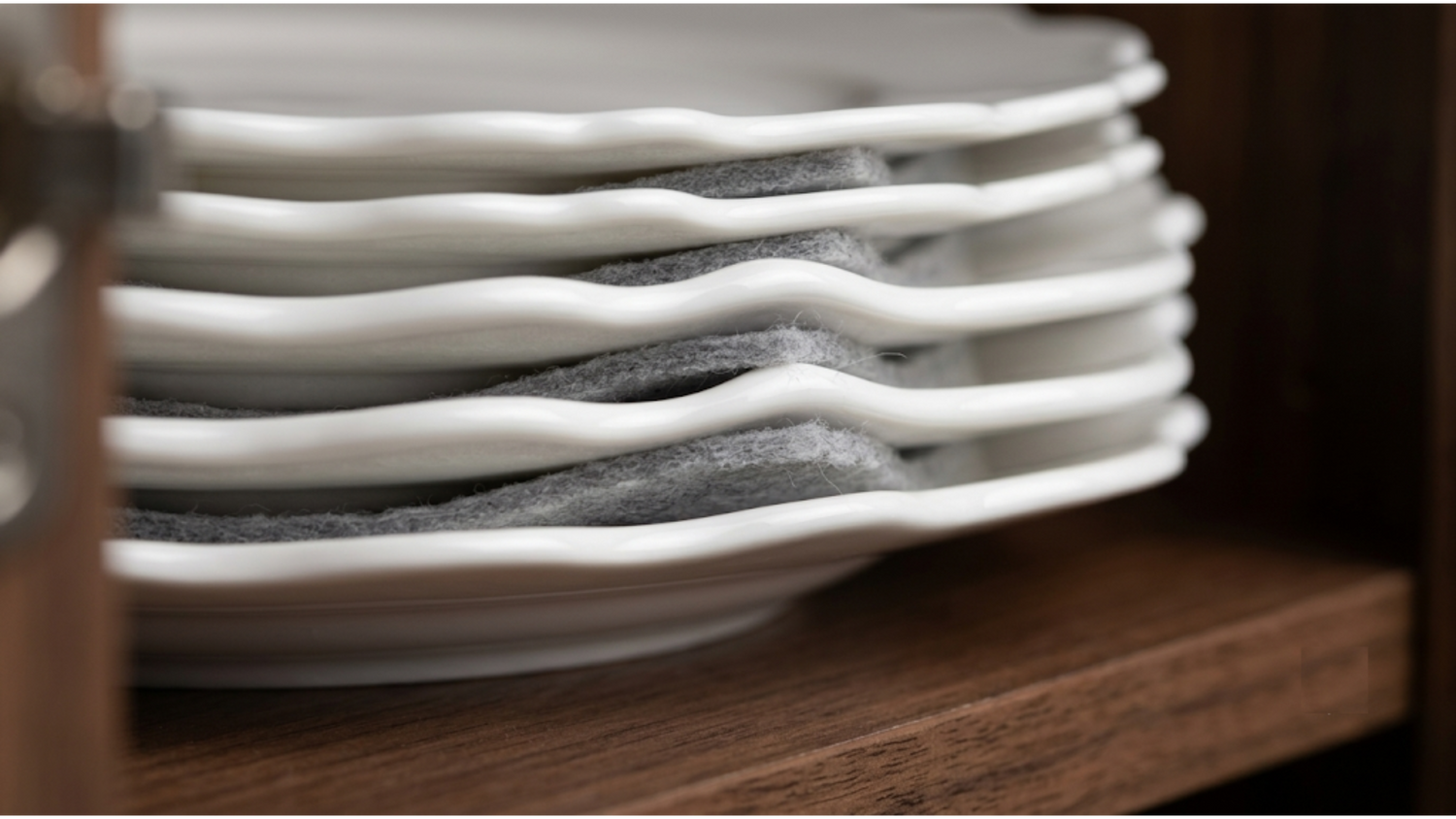
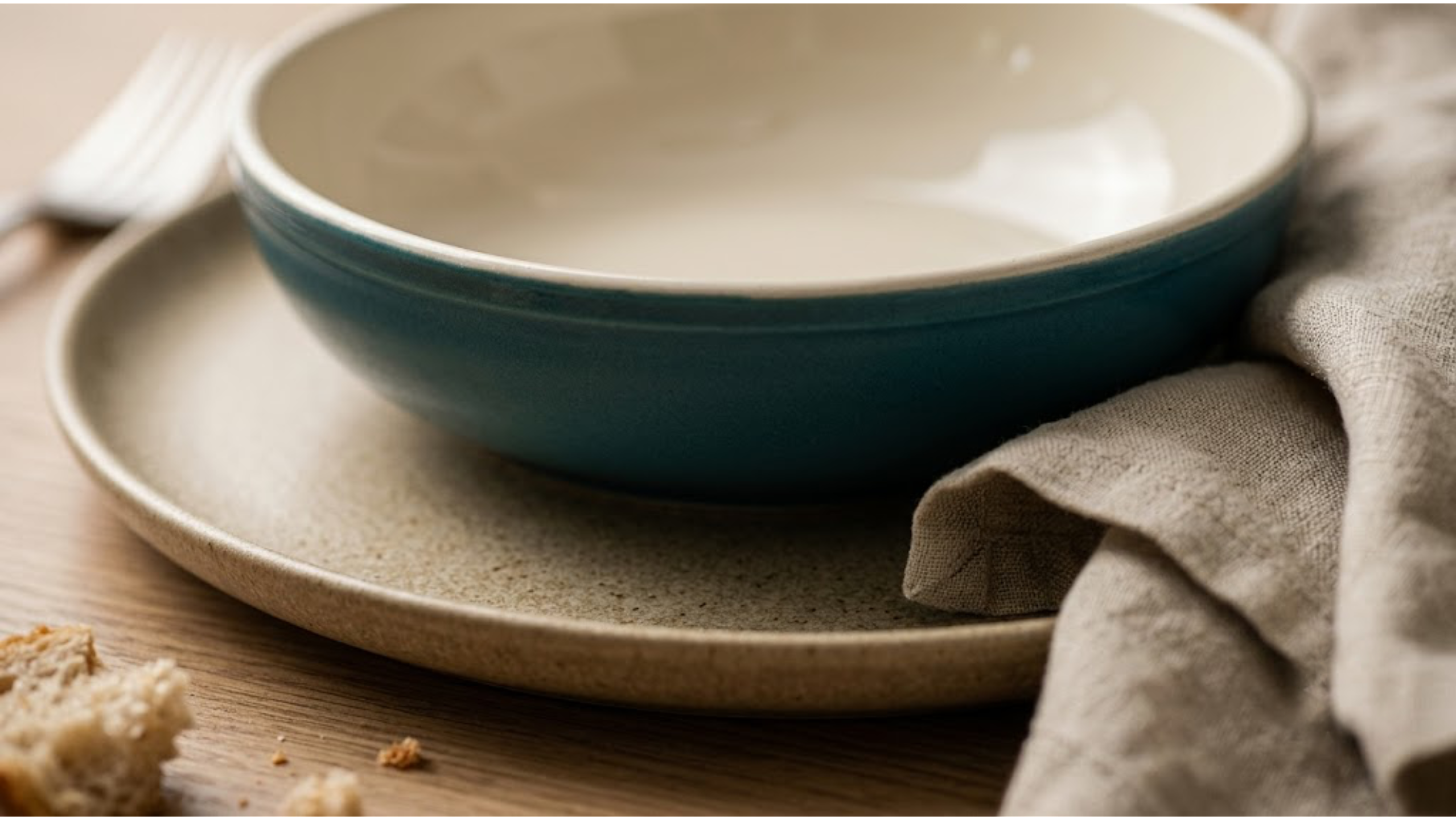
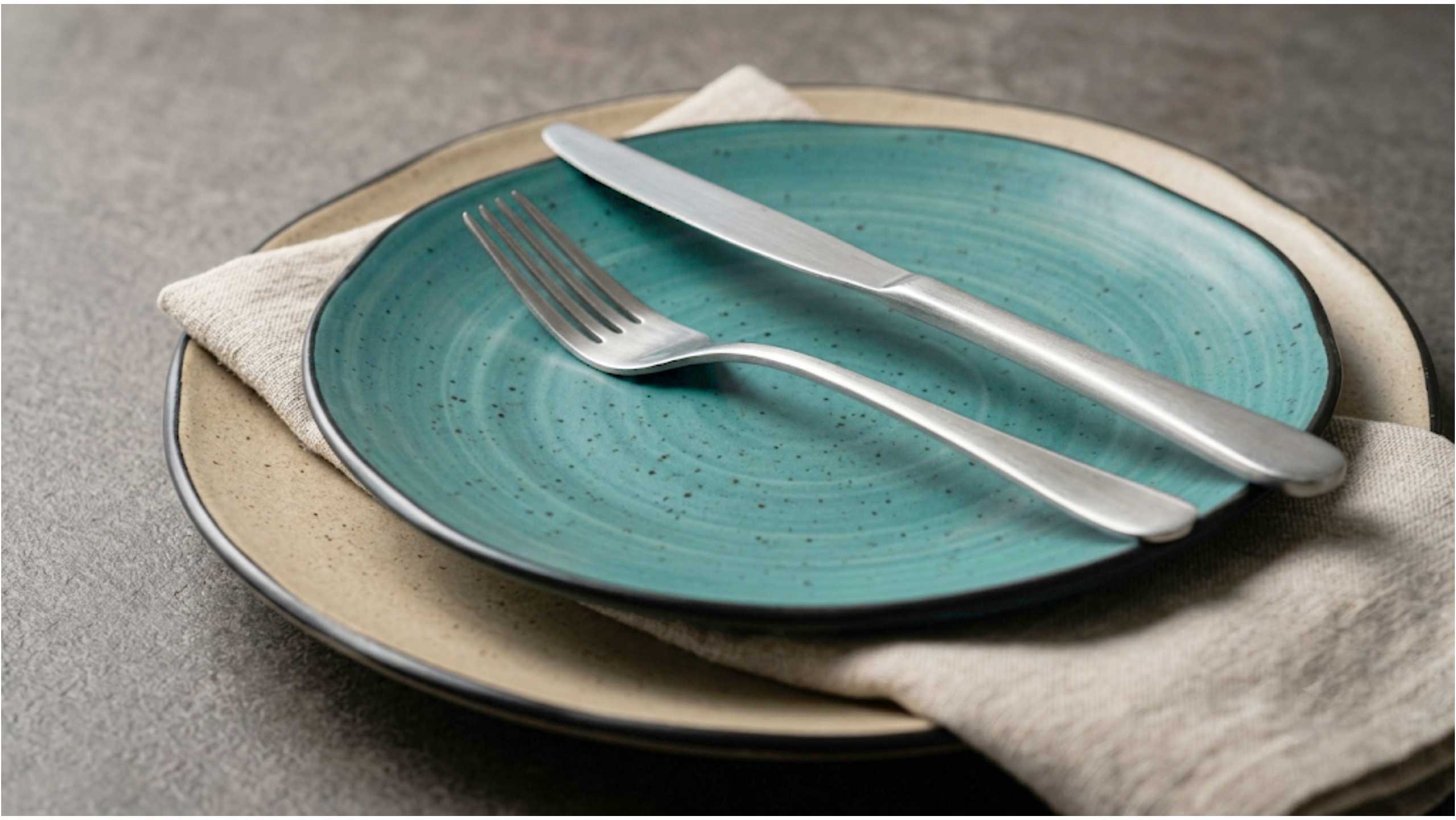
Investing in simple felt or microfiber plate dividers is a game-changer for your cabinets. By placing a soft, inexpensive pad between each plate, you create a shock-absorbing buffer. This is especially crucial for pieces with textured or matte finishes, like our signature teal blue-green collections, where preserving the tactile surface is just as important as protecting the rim. If you are in a pinch, even a simple paper towel or a thin cork circle placed between bowls can dramatically reduce friction. Additionally, apply a strict height limit: never stack more than six to eight large dinner plates together. Keeping stacks manageable ensures the bottom plate isn't crushed and makes unloading the dishwasher a much safer task.

A simple felt divider acts as a shock absorber, protecting both the edges and the beautiful bone china.
Rethinking Your Cabinet Organization
Sometimes the best way to prevent stacking damage is to stop stacking altogether. Human nature dictates that we will always grab the easiest plate to reach. If you are constantly wrestling with a leaning tower of heavy bowls to retrieve a single salad plate, you are drastically increasing the risk of an accidental drop or a hard chip against the cabinet door.
Introducing Vertical Storage Solutions
The Efficiency of Plate Racks and Pegs
Consider integrating a vertical plate rack into your lower cabinets or open shelving. Storing your dishes vertically, much like books on a bookshelf, allows you to slide out a single plate without disturbing any of the others. This completely eliminates bottom-plate weight pressure and the dangerous sliding friction. Vertical organization is particularly perfect for a rustic farmhouse kitchen aesthetic, turning your functional SIP Foundary tableware into a beautiful, visible part of your home decor. Keep your most heavily used everyday items on the shelves that sit comfortably between your waist and chest height, ensuring you never have to stretch or blindly reach for a heavy ceramic piece.

Vertical storage completely eliminates stacking pressure and makes setting the table effortless.
Handling Unique Shapes with Confidence
While flat dinner plates are relatively straightforward to manage, the other elements of your dining set require a slightly different approach. Bowls and mugs often have distinct organic shapes, delicate rims, or protruding handles that act as natural targets for accidental chips inside a busy, crowded cupboard.
Protecting Your Mugs and Bowls
Why Handles Need Extra Breathing Room
When storing bowls, always nest them gently rather than dropping them into each other, and try to use a soft liner if they fit snugly. Mugs, however, demand the most care. While hanging mugs by their handles beneath a cabinet looks undeniably charming, it places all the physical stress on the weakest joint of the ceramic. For heavy, high-quality stoneware mugs, it is significantly safer to store them resting upside down on their stable top rims, or upright with plenty of breathing room between them. Avoid cramming them tightly together where their handles can aggressively knock against one another every time the cabinet door closes.
Your tableware is the silent witness to your family's most important moments—from chaotic weekday breakfasts to lingering weekend dinners. By implementing these simple, mindful organization strategies, you remove the anxiety of accidental damage and ensure your dishes remain a source of comfort rather than stress. Taking a few extra seconds to store your items properly honors the craftsmanship of the pieces and the love you pour into every meal. If you are ready to curate a kitchen filled with durable, beautifully grounded pieces designed for real life, explore our Dinner Sets. Discover tableware that brings effortless warmth to your home, built to last through years of beautifully messy family dinners.


Leave a comment
This site is protected by hCaptcha and the hCaptcha Privacy Policy and Terms of Service apply.